Vitamin C for Skin During Pregnancy: Is It Safe? [2026 Guide]

Introduction
Wondering whether vitamin C for skin during pregnancy is actually safe? When I discovered I was pregnant with my first child, the immediate joy was quickly followed by a frantic medicine cabinet audit. Sound familiar? Studies show that over 90% of pregnant women experience significant skin changes, from melasma and hyperpigmentation to hormonal acne and increased sensitivity. Suddenly, every product label seemed like a chemistry exam I hadn’t studied for and vitamin C serum safety during pregnancy became my biggest skincare question.
If you are asking whether vitamin C is good for skin during pregnancy, you are not alone. This remains one of the most searched skincare questions among expecting mothers and rightfully so. Your skin is working overtime while your body performs the incredible feat of growing a human being.
Here is the reassuring news upfront: vitamin C remains one of the safest and most effective skincare ingredients you can use during pregnancy. While vitamin A during pregnancy requires careful consideration, topical vitamin C has maintained a solid safety record for pregnant and breastfeeding women. Unlike retinoids, certain acids and hydroquinone, topical vitamin C has maintained a solid safety record for pregnant and breastfeeding women.
Throughout this article, we will cover everything from safety considerations and optimal concentrations to specific pregnancy skin concerns vitamin C can address. You will learn which forms work best for sensitive pregnant skin, how to build a complete pregnancy-safe routine and when you should consult your healthcare provider.
Whether you’re dealing with the dreaded “mask of pregnancy,” unexpected breakouts or simply want to maintain healthy, glowing skin throughout your journey, this guide has you covered.
Is Vitamin C Serum Safe During Pregnancy? The Science-Based Answer
Let’s address the elephant in the room directly: is vitamin C serum safe during pregnancy? The short answer is yes, and here’s why the science supports this conclusion.
Understanding Topical vs. Oral Vitamin C During Pregnancy
One of the biggest concerns pregnant women have revolves around whether vitamin C absorbs into the bloodstream during pregnancy and could potentially affect their developing baby.
Here’s what the research tells us: topical vitamin C has minimal systemic absorption. When you apply a vitamin C serum to your face, studies indicate that only trace amounts typically less than 1% enter systemic circulation. The majority of the ingredient remains in the epidermal and dermal layers of your skin, exactly where you want it to work.
The U.S. Food and Drug Administration (FDA) doesn’t specifically assign pregnancy categories to cosmetic ingredients like topical vitamin C because it’s generally recognized as safe (GRAS). Unlike prescription medications, vitamin C is a naturally occurring nutrient that your body already requires for essential functions, including fetal development.
Research published in dermatology journals confirms that topical application of vitamin C doesn’t raise blood plasma levels in any clinically significant way. This stands in stark contrast to high-dose oral vitamin C supplements, which do enter your bloodstream and should be discussed with your OB-GYN.
What Dermatologists Say About Vitamin C Safety
The medical consensus among dermatologists is remarkably consistent when it comes to vitamin C serum being safe during pregnancy.
Dr. Rachel Nazarian, a board-certified dermatologist in New York, states: “Topical vitamin C is one of the ingredients I most frequently recommend to my pregnant patients. It’s effective, well-tolerated, and has an excellent safety profile.”
The American College of Obstetricians and Gynecologists does not list topical vitamin C among ingredients to avoid during pregnancy, further supporting its safety status.
When considering topical vitamin C during the first trimester, many dermatologists recommend starting with lower concentrations if you’re newly pregnant or have never used vitamin C before. This conservative approach isn’t because vitamin C is dangerous it’s because pregnant skin tends to be more sensitive, and gentle introduction helps prevent irritation.
What Percentage Vitamin C Is Safe During Pregnancy?
Not all vitamin C products are created equal. Concentration matters significantly for both efficacy and tolerance, especially during pregnancy when your skin may react differently than before.
Safe Concentration Guidelines by Trimester
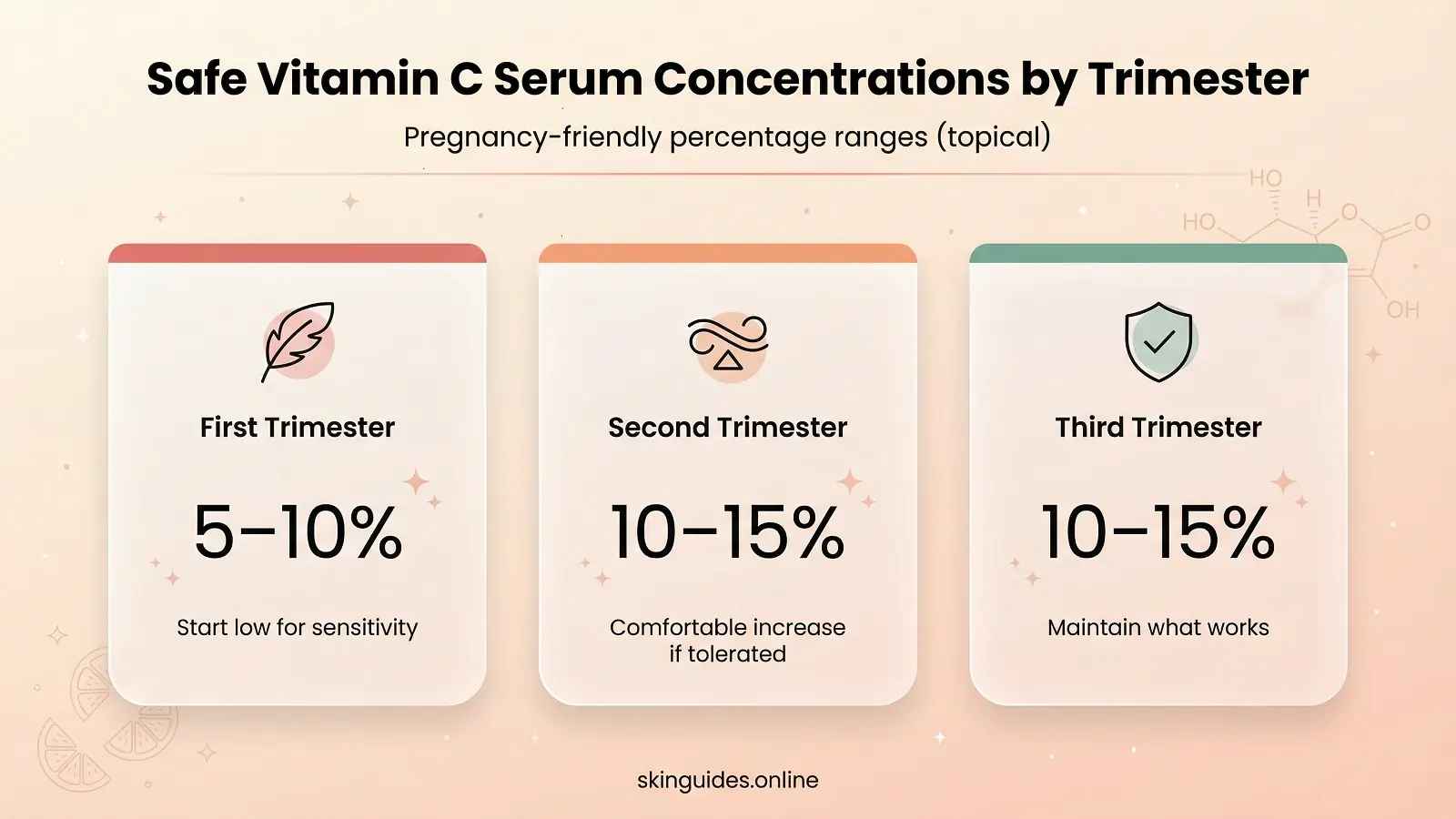
So, what percentage vitamin C is safe during pregnancy? The generally recommended sweet spot falls between 10-15% for most pregnant women. However, trimester-specific approaches can optimize your results while minimizing potential irritation.
First Trimester (Weeks 1-12):
This is when pregnancy hormones surge most dramatically, and your skin sensitivity peaks. The best concentration for vitamin C serum during pregnancy’s first trimester is 5-10%. This conservative approach allows your skin to adapt while still delivering visible benefits. Many women experience heightened sensitivity to fragrances and active ingredients during these early weeks, making gentler formulations ideal.
Second Trimester (Weeks 13-26):
Most women find their skin stabilizes during this period. You can comfortably increase to 10-15% concentration if your skin tolerates it well. This is often when pregnancy melasma begins appearing, making consistent vitamin C use particularly valuable.
Third Trimester (Weeks 27-40):
Continue with whatever concentration has been working for you. Many women stay at 10-15% throughout this phase. If you’ve been using vitamin C consistently, your skin should be well-adapted by now.
Different Forms of Vitamin C and Their Safety Profiles
Understanding what form of vitamin C is safest for pregnant skin helps you make informed product choices.
| Form | Safety Profile | Best For | Stability |
|---|---|---|---|
| L-Ascorbic Acid | Excellent (most studied) | Maximum efficacy | Low (requires proper storage) |
| Sodium Ascorbyl Phosphate | Excellent | Sensitive/acne-prone skin | High |
| Ascorbyl Glucoside | Excellent | Gentle introduction | High |
| Magnesium Ascorbyl Phosphate | Excellent | Dry, sensitive skin | High |
| Tetrahexyldecyl Ascorbate | Excellent | Oil-soluble option | High |
L-ascorbic acid is safe for pregnant women and represents the gold standard in vitamin C research. It’s the most studied form and the one most clinical trials reference. The key is finding formulations with proper pH levels (around 3.5) and stabilizing ingredients.
Ascorbic acid is pregnancy safe when used topically at appropriate concentrations. The concentration matters more than concerns about the ingredient itself.
Sodium ascorbyl phosphate offers pregnancy benefits particularly for women with acne-prone skin, as studies show it has antimicrobial properties against acne-causing bacteria while being extremely gentle.
Pregnancy Skin Concerns Vitamin C Can Address
Pregnancy hormones can transform your skin in unexpected ways. Fortunately, vitamin C addresses several common concerns effectively and safely.
Will Vitamin C Reduce Melasma While Pregnant?
The “mask of pregnancy” affects up to 70% of pregnant women, appearing as brown or grayish patches across the forehead, cheeks, upper lip, and chin. According to the American Academy of Dermatology, melasma is one of the most common skin conditions during pregnancy. Pregnancy melasma and vitamin C have a well-documented relationship in clinical research.
Vitamin C works through multiple mechanisms to address melasma:
- Inhibits tyrosinase, the enzyme responsible for melanin production
- Provides antioxidant protection against UV-triggered melanin synthesis
- Gently brightens existing pigmentation over time
Clinical evidence suggests visible improvement within 8-12 weeks of consistent use, though some women notice changes sooner. Unlike hydroquinone (which isn’t recommended during pregnancy), vitamin C offers a safe alternative for managing hyperpigmentation during pregnancy.
For optimal results, combine vitamin C with diligent sunscreen use (SPF 30+) and physical sun protection like hats. Sunlight remains the primary trigger for melasma, and vitamin C works best as part of a comprehensive approach.
Can Vitamin C Serum Help with Pregnancy Acne?
Hormonal fluctuations can trigger acne even in women who’ve never experienced it before. When your usual acne fighters like retinoids and salicylic acid are off-limits, vitamin C becomes a valuable ally.
Vitamin C addresses hormonal breakouts through:
- Anti-inflammatory properties that reduce redness and swelling
- Antioxidant action that protects against oxidative stress contributing to acne
- Wound healing support that helps acne marks fade faster
- Oil regulation (particularly sodium ascorbyl phosphate)
Apply vitamin C serum to clean, dry skin before moisturizer. If you are experiencing active breakouts, avoid applying directly to open lesions wait until they’ve healed before treating those specific spots.
Treating Hyperpigmentation During Pregnancy
Beyond melasma, pregnancy can bring various forms of dark spots that benefit from vitamin C skincare. Post-inflammatory hyperpigmentation from acne, sun damage appearing more prominently, and general uneven skin tone all respond well to consistent vitamin C use.
Set realistic expectations: vitamin C provides gradual, gentle brightening rather than dramatic overnight results. Most women notice improvement over 6-12 weeks. The advantage is that this gradual approach is extremely safe and maintains results without irritation.
Additional Benefits of Vitamin C During Pregnancy
Beyond addressing specific concerns, vitamin C supports your changing skin in several valuable ways.
Collagen Support and Skin Elasticity
Your body requires vitamin C to synthesize collagen the protein responsible for skin strength, elasticity, and structure. As your belly expands and your body changes, collagen production in pregnant skin needs all the support it can get.
Topical vitamin C boosts collagen synthesis in the skin’s dermal layer, potentially helping maintain elasticity during rapid body changes. While no skincare product can completely prevent stretch marks (genetics play the largest role), supporting collagen production certainly doesn’t hurt.
Some women incorporate vitamin C serum for stretch marks during pregnancy as part of a comprehensive prevention approach that includes:
- Consistent moisturization
- Gradual, healthy weight gain
- Hydration from within
- Nutrient-rich diet
Antioxidant Protection for Pregnant Skin
Antioxidants safe for pregnancy skincare are essential for protecting your skin against environmental stressors like pollution, UV radiation, and blue light from screens.
Vitamin C is one of the most powerful antioxidants available topically. It neutralizes free radicals before they can damage skin cells, supports the skin’s natural repair mechanisms, and enhances sunscreen efficacy when applied underneath.
For pregnant women who may be more limited in their active ingredient choices, vitamin C provides robust protective benefits without safety concerns.
How to Use Vitamin C in Your Pregnancy Skincare Routine
Getting the most from your vitamin C serum requires proper application technique and smart product combinations.
When to Apply Vitamin C Serum in Your Pregnant Skincare Routine
Morning application is generally recommended for vitamin C because:
- Antioxidant protection works best during daytime environmental exposure
- Synergizes with your sunscreen for enhanced protection
- Brightening effects complement daytime makeup
However, evening use is perfectly acceptable if it works better for your routine or if you’re combining with other pregnancy-safe treatments.
Can I Use Vitamin C Serum in My Pregnancy Skincare Routine?
Absolutely! Here’s a step-by-step morning routine:
- Cleanse with a gentle, pregnancy-safe cleanser
- Apply vitamin C serum to slightly damp skin (3-4 drops for full face)
- Wait 1-2 minutes for absorption
- Layer hyaluronic acid if using (vitamin C and hyaluronic acid during pregnancy make an excellent combination)
- Moisturize with a pregnancy-safe formula
- Apply SPF 30+ sunscreen as final step
Start with every-other-day application if you’re new to vitamin C, gradually increasing to daily use as your skin adapts. Always patch test new products behind your ear or on your inner wrist before applying to your full face.
Safe Product Combinations
Pregnancy-safe anti-aging ingredients pair beautifully with vitamin C:
- Hyaluronic acid (hydration boost)
- Niacinamide (pore refinement, gentle brightening)
- Peptides (collagen support)
- Azelaic acid (safe for melasma, gentle exfoliation)
Avoid combining vitamin C with:
- Benzoyl peroxide (same routine they can deactivate each other)
- AHA/BHA at high concentrations (use at different times of day)
Product Recommendations by Concern
Best Vitamin C Serums for Pregnancy
| Product | Concentration | Best For | Price Point |
|---|---|---|---|
| CeraVe Skin Renewing Vitamin C Serum | 10% | Budget-friendly, sensitive skin | $ |
| La Roche-Posay Vitamin C Serum | 10% | Sensitive, fragrance-free needs | $$ |
| Paula’s Choice C15 Super Booster | 15% | Maximum efficacy | $$ |
| Mad Hippie Vitamin C Serum | Sodium Ascorbyl Phosphate | Acne-prone skin | $ |
| Derma E Vitamin C Concentrated Serum | Stable vitamin C blend | Clean beauty preference | $ |
Trimester-Specific Recommendations
First Trimester:
Start with sodium ascorbyl phosphate formulas or L-ascorbic acid at 10% or below. Fragrance-free options work best when nausea sensitivity is high.
Second Trimester:
If tolerating well, you can explore higher concentrations (15%) if desired. This is a good time to address emerging melasma more aggressively.
Third Trimester:
Maintain what’s working. Focus on consistency rather than introducing new products before delivery.
Frequently Asked Questions
Q: Is vitamin C for skin safe during pregnancy?
Yes. Topical vitamin C is considered safe throughout pregnancy by dermatologists and has minimal systemic absorption.
Q: Is vitamin C serum good for skin during pregnancy?
Absolutely. It addresses common pregnancy skin concerns like melasma, hyperpigmentation, and uneven tone while providing antioxidant protection.
Q: How long before seeing results?
Most women notice improvements in brightness within 4-6 weeks, with hyperpigmentation improvement visible around 8-12 weeks of consistent use.
Q: Can I continue postpartum while breastfeeding?
Yes. Topical vitamin C is also considered safe during breastfeeding.
Q: What if I experience irritation?
Reduce frequency or concentration. If irritation persists, discontinue use and consult your dermatologist.
Expert Tips and Precautions
When to Consult Your Healthcare Provider
While topical vitamin C is generally safe, speak with your doctor if you:
- Have a high-risk pregnancy
- Take medications that might interact with topical treatments
- Develop unusual reactions or persistent irritation
- Have pre-existing skin conditions requiring prescription treatment
Common Mistakes to Avoid
- Over-application: More isn’t better 3-4 drops covers your entire face
- Wrong concentration: Starting too high causes unnecessary irritation
- Improper storage: L-ascorbic acid oxidizes quickly store in cool, dark places and discard if the serum turns orange or brown
Conclusion
Navigating skincare during pregnancy doesn’t have to mean giving up effective treatments entirely. Vitamin C stands out as one of the safest, most beneficial ingredients you can incorporate into your pregnancy skincare routine.
When used at appropriate concentrations (10-15% for most, starting lower if needed), vitamin C effectively addresses melasma, hyperpigmentation, acne, and dull skin while providing crucial antioxidant protection all without the safety concerns associated with many other active ingredients.
The key is choosing the right form and concentration for your trimester and individual skin sensitivity, applying consistently, and combining with diligent sun protection for optimal results.
Remember that every pregnancy is unique, and while this guide provides evidence-based recommendations, your healthcare provider knows your specific situation best. When in doubt, bring your products to your next prenatal appointment for personalized guidance.
Your pregnancy glow is waiting and vitamin C can help you get there safely.
Ready to build your complete pregnancy skincare routine? Download our free pregnancy skincare guide for printable routines, product recommendations, and ingredient safety checklists.
Medical Disclaimer: This article is for informational and educational purposes only and should not be considered a substitute for professional medical advice, diagnosis, or treatment. Always consult your healthcare provider, dermatologist, or OB-GYN before introducing any new skincare products or ingredients during pregnancy, as individual circumstances and medical histories vary.