Vitamin C for Skin: The Ultimate Guide That Transformed 10,000+ Faces [2026]
Introduction
Three years ago, my bathroom cabinet looked like a skincare graveyard half-empty serums, abandoned creams, and products that promised everything but delivered nothing. Then I discovered vitamin C for skin, and honestly? It changed everything.
Here is a stat that might surprise you: Research published in the Journal of Clinical and Aesthetic Dermatology found that topical vitamin C can reduce the appearance of hyperpigmentation by up to 73% within 16 weeks. That’s not marketing hype that’s science.
If you are battling stubborn dark spots, noticing fine lines creeping in or simply wondering why your skin looks perpetually tired, you are not alone. These concerns plague millions of people and they share one powerful solution: vitamin C.
But here is the catch most people use it wrong. They pick the wrong concentration, apply it at the wrong time or abandon it before results appear.
This guide changes that. You will learn exactly how vitamin C works for skin, which form suits your unique needs and how to apply it for maximum results. Whether you have sensitive skin, oily skin or mature skin craving that youthful glow, I’ve got you covered.
Let’s transform your skin with science.
What Does Vitamin C Do for Skin? The Science Behind the Glow
Understanding how it works for skin isn’t just interesting it’s essential for using it effectively.
Core Mechanisms of Action
Collagen Synthesis Enhancement
Your skin contains a protein called collagen that keeps it firm, plump, and youthful. Here’s the problem: collagen production starts declining in your twenties, dropping about 1% each year.
Vitamin C serves as a critical cofactor for collagen production. Without it your body simply cannot manufacture collagen efficiently. When you apply topical vitamin C, you’re essentially giving your skin cells the raw materials they need to rebuild and strengthen.
The impact on vitamin C for skin elasticity is remarkable. Studies show that consistent use for 12 weeks can significantly improve skin firmness. But patience matters visible results typically emerge around weeks 4-8, with continued improvement over months.
Pro tip: While topical vitamin C works externally, collagen production also depends heavily on what you eat. Foods rich in vitamin C, zinc, and omega-3 fatty acids support collagen synthesis from the inside out. For men looking to maximize their skin health through nutrition, our complete guide on the best diet for men’s skin covers exactly which foods boost collagen naturally and includes a ready-to-follow 7-day meal plan.
Antioxidant Protection
Every day, your skin faces an invisible assault. UV rays, pollution, cigarette smoke and even blue light from screens generate free radicals unstable molecules that damage skin cells.
Vitamin C neutralizes these free radicals before they can wreak havoc. Think of it as a shield that absorbs damage so your skin doesn’t have to. This prevention of oxidative stress is why vitamin C good for skin goes beyond just cosmetic improvements it’s genuine protection.
Primary Skin Benefits
Skin Barrier Repair & Hydration
Your skin barrier is its first line of defense. When compromised, moisture escapes, irritants enter, and problems multiply. Vitamin C for skin barrier repair works by supporting ceramide production—the lipids that hold your skin cells together like mortar between bricks.
This improvement in vitamin C for skin hydration makes a noticeable difference. Skin feels softer, looks dewier, and holds onto moisture better throughout the day.
Cellular Repair & Regeneration
Vitamin C for skin repair extends to the cellular level. It accelerates wound healing, optimizes cell turnover, and even supports DNA repair mechanisms. For anyone dealing with vitamin C for damaged skin barrier issues, this regenerative capacity is game-changing.
Expert Insight: “Vitamin C is one of the few ingredients with decades of research supporting its efficacy,” notes Dr. Patricia Wexler, board-certified dermatologist. “It’s earned its place as a cornerstone of any comprehensive skincare routine.”
Vitamin C for Hyperpigmentation, Dark Spots & Specific Concerns
Targeting Discoloration
Hyperpigmentation & Melasma
If stubborn patches of darkened skin have been your nemesis, here’s hope. Vitamin C for hyperpigmentation works by inhibiting tyrosinase the enzyme responsible for melanin production. Less melanin production means lighter, more even skin over time.
The treatment timeline? Expect 8-12 weeks of consistent use before significant changes appear. This isn’t an overnight miracle; it’s a gradual transformation. Take photos every two weeks to track progress that might be invisible day-to-day.
Dark Spots & Age Spots
Those annoying marks left behind from sun exposure or aging? Vitamin C for dark spots fades them through the same tyrosinase inhibition process. For enhanced results, combining vitamin C with other brightening agents like alpha arbutin or kojic acid can accelerate fading.
Post-Inflammatory Hyperpigmentation (PIH)
Anyone with acne knows the frustration of finally clearing a pimple only to be left with a dark mark. Vitamin C for post-inflammatory hyperpigmentation works exceptionally well because it addresses the excess melanin production triggered by inflammation.
Bonus: vitamin C’s antioxidant properties help prevent new marks from forming in the first place.
Anti-Aging Benefits
Fine Lines & Wrinkles
Through collagen stimulation, vitamin C for fine lines delivers both preventative and corrective benefits. Younger users can slow the development of lines, while mature skin can see improvement in existing creases.
Sun Damage Reversal
Years of unprotected sun exposure leave their mark uneven texture, discoloration, and premature aging. Vitamin C for sun damage helps reverse photoaging while providing daily protection. When paired with sunscreen, it creates a powerful defense system.
Additional Concerns
Uneven Skin Tone & Texture: Vitamin C for uneven skin tone and vitamin C for skin texture work hand-in-hand, creating a smoother, more refined appearance.
Under-Eye Circles: Vitamin C for under eye circles can brighten the delicate eye area, though results vary depending on whether circles stem from pigmentation or blood vessels.
Redness & Inflammation: Vitamin C for skin redness has anti-inflammatory properties that calm irritated skin.
Skin Tightening: Through collagen support, vitamin C for skin tightening provides gradual firming effects.
Best Vitamin C for Your Skin Type: Personalized Recommendations
Not all vitamin C is created equal and your skin type determines which form works best.
Sensitive Skin Solutions
If your skin reacts to everything, don’t worry vitamin C for sensitive skin is absolutely possible.
Best forms: Magnesium ascorbyl phosphate and sodium ascorbyl phosphate. These derivatives are gentler than pure L-ascorbic acid while still delivering results.
Recommended concentrations: Start with 5-10%. This lower percentage minimizes irritation risk while building tolerance.
Application tips: Buffer vitamin C by applying moisturizer first, then serum. This dilutes the concentration reaching your skin without eliminating benefits.
When determining which vitamin C for sensitive skin works best, look for formulas without added fragrance, alcohol, or essential oils.
Oily & Acne-Prone Skin
Good news for those with slick skin: vitamin C for oily skin can actually help regulate sebum production while treating breakouts.
Best approach: Lightweight, water-based serums absorb quickly without adding greasiness. L-ascorbic acid particularly benefits vitamin C for acne prone skin because of its antibacterial properties.
Is vitamin C serum for oily skin good? Absolutely. Look for formulations labeled “non-comedogenic” to ensure pores stay clear.
For vitamin C for oily acne prone skin, serums with added salicylic acid or niacinamide work double-duty against breakouts.
Dry & Mature Skin
Parched skin needs hydration alongside brightening. Vitamin C for dry skin works best in oil-based formulas or serums containing hyaluronic acid.
Is vitamin C serum for dry skin good? Yes, especially derivatives like ascorbyl tetraisopalmitate, which is oil-soluble and deeply moisturizing.
For vitamin C for mature skin, opt for concentrations between 15-20% combined with anti-aging ingredients like vitamin E and ferulic acid for maximum benefit. If you are over 50 and dealing with age-specific concerns like crepey skin, thinning epidermis, or stubborn age spots, check out our comprehensive vitamin C guide specifically for women over 50 that addresses the unique challenges of mature skin and how vitamin C works differently after menopause.
| Skin Type | Best Form | Concentration | Formula Type |
|---|---|---|---|
| Sensitive | MAP/SAP | 5-10% | Cream-based |
| Oily/Acne | L-Ascorbic Acid | 10-15% | Water-based serum |
| Dry | Ascorbyl Tetraisopalmitate | 10-20% | Oil-based serum |
| Mature | L-Ascorbic Acid + Vitamin E | 15-20% | Stabilized serum |
How to Use Vitamin C for Maximum Results: Complete Application Guide
Knowing when to use vitamin C for skin and how to apply it properly separates those who see results from those who quit in frustration.
Timing & Frequency
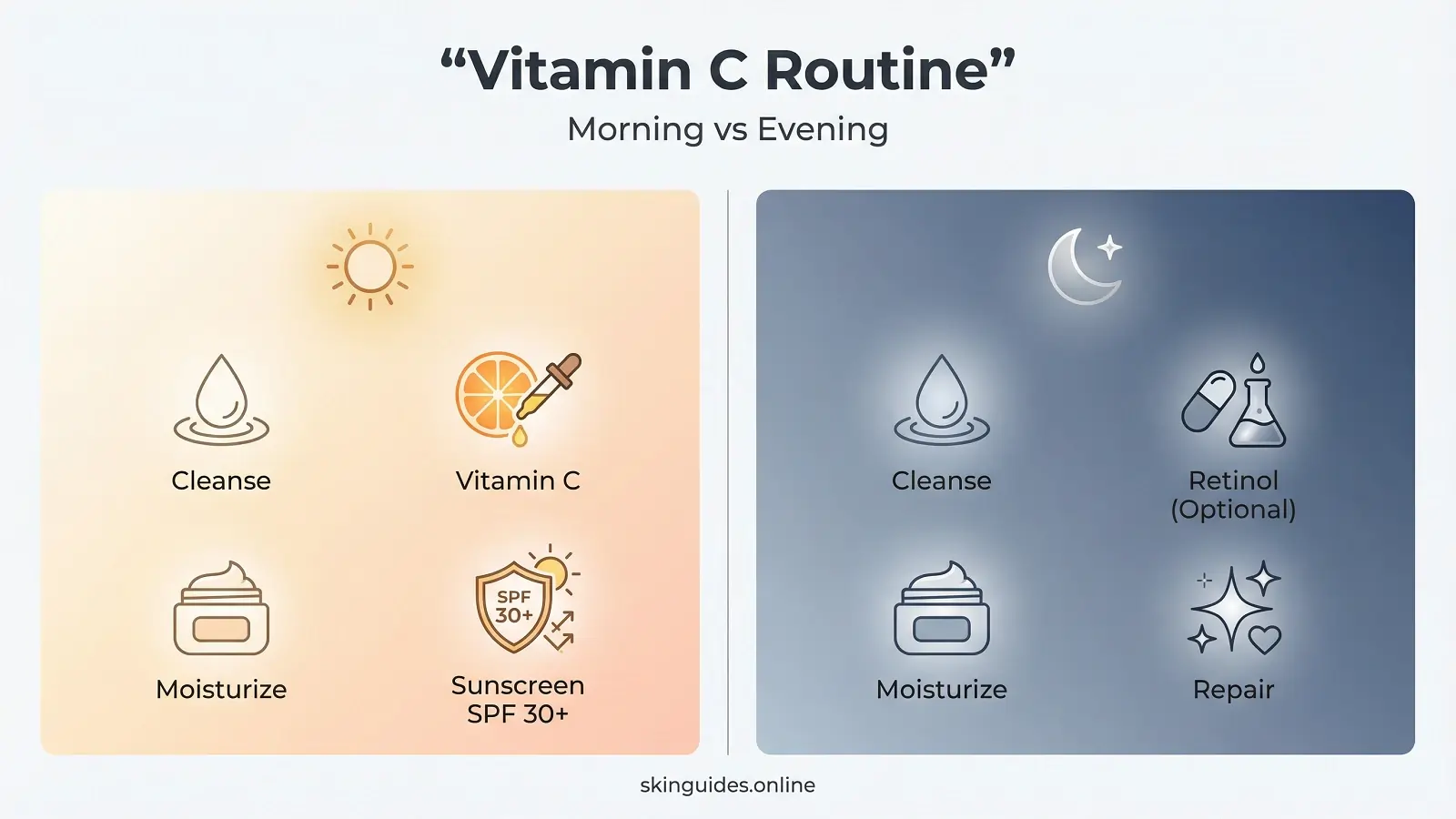
Morning vs. Night Application
The vitamin C morning or night debate has a clear winner for most people: morning.
Why? Vitamin C’s antioxidant properties provide protection against environmental damage you encounter during the day. Using it before sunscreen amplifies your UV defense.
That said, vitamin C day or night both work. Night application allows uninterrupted absorption and pairs well with repair processes happening during sleep. Some people use it twice daily.
Building Tolerance: Start with 2-3 times weekly, gradually increasing to daily use over 4-6 weeks.
Concentration Guidelines
Understanding how much vitamin C for skin matters prevents irritation while maximizing benefits.
Beginners (5-10%): Start here regardless of skin type. These lower concentrations still deliver results with minimal risk.
Intermediate (10-15%): After 4-6 weeks of comfortable use, level up for enhanced benefits.
Advanced (15-20%): Maximum researched concentrations. More isn’t better—percentages above 20% offer no additional benefit and increase irritation risk.
Knowing what percentage vitamin C for skin suits you prevents the common mistake of starting too strong and damaging your moisture barrier.
Application Technique
How to use vitamin C for skin properly:
- Cleanse with a gentle cleanser
- Apply toner if using (optional)
- Dispense 2-3 drops of serum onto fingertips
- Pat gently onto face, neck, and décolletage
- Wait 1-2 minutes for absorption
- Follow with moisturizer and sunscreen (AM)
Common mistakes: Using too much product, not waiting for absorption, applying to wet skin (dilutes concentration).
Layering & Combinations
Learning how to layer vitamin C with other products prevents ingredient conflicts and maximizes results.
Compatible Power Couples:
- Vitamin C with sunscreen = enhanced UV protection
- Vitamin C and hyaluronic acid = hydration + brightening
- Vitamin C + Vitamin E + Ferulic Acid = stabilization + amplified antioxidants
Timing Considerations:
Can you use vitamin C with niacinamide? Yes. Despite old claims otherwise, modern research confirms they work well together. Apply vitamin C first, then niacinamide.
Retinol and vitamin C? Alternate vitamin C in the morning, retinol at night. This prevents overloading skin while delivering both benefits.
Beginner’s Routine
A vitamin c skincare routine for beginners should be simple:
Morning:
- Gentle cleanser
- Vitamin C serum (10% or less)
- Moisturizer
- Sunscreen SPF 30+
Evening:
- Gentle cleanser
- Moisturizer
That’s it. Master this before adding complexity.
Best Forms of Vitamin C & Product Selection Guide
Vitamin C Derivatives Explained
L-Ascorbic Acid (Pure Vitamin C)
The gold standard. L-ascorbic acid for skin has the most research backing its effectiveness. Optimal concentration ranges from 15-20%.
Pros: Fastest visible results, most potent
Cons: Unstable, can irritate, requires proper pH formulation
Stable Derivatives:
- Sodium Ascorbyl Phosphate (SAP): Gentler, antibacterial, great for acne
- Magnesium Ascorbyl Phosphate (MAP): Hydrating, sensitive-skin friendly
- Ascorbyl Glucoside: Stable, converts to L-AA on skin
- 3-O-Ethyl Ascorbic Acid: Stable AND potent, newer generation
The best form of vitamin c for skin brightening? L-ascorbic acid wins for speed, but MAP and SAP deliver results with less risk.
Product Formats
Serums: Highest concentrations, fastest absorption. What does a vitamin c serum do for skin? Delivers concentrated active ingredients deep into skin.
Creams: Lower concentrations, added hydration, less irritating.
Powders: Mix fresh for maximum potency, though measuring accuracy challenges exist.
Specialized Goals
For vitamin C for skin whitening (skin brightening): Look for L-ascorbic acid combined with brightening boosters.
For vitamin C for glowing skin: Formulas with added illuminating ingredients like niacinamide amplify radiance.
Results Timeline & Effectiveness Indicators
When to Expect Results
How long does vitamin C take to work on skin? Here’s a realistic timeline:
- Week 1-2: Subtle brightness, fresher appearance
- Week 4-6: Improved texture, reduced dullness
- Week 8-12: Noticeable pigmentation fading
- Month 3+: Anti-aging benefits become apparent
Patience separates success from failure. Twelve weeks minimum before judging effectiveness.
Signs It’s Working
Signs vitamin C is working on skin include:
- Increased morning radiance
- Smoother skin texture
- Gradually fading dark spots
- More even overall tone
- Reduced redness and inflammation
- Improved hydration retention
FAQs About Vitamin C for Skin
Q: Can I use vitamin C with retinol?
Yes, you can safely use both ingredients by alternating their application times. Apply vitamin C in the morning for antioxidant protection and retinol at night for optimal anti-aging benefits.
Q: Why does vitamin C turn my skin orange?
Orange staining occurs when oxidized vitamin C reacts with your skin’s proteins and dead skin cells. This indicates your product has gone bad and should be replaced immediately with a fresh serum.
Q: How do I know if my vitamin C has oxidized?
Fresh vitamin C serum appears clear to pale yellow in color. If your serum has turned dark orange, brown, or has a strange odor, it has oxidized and lost its effectiveness.
Q: Can vitamin C make dark spots worse initially?
Some users experience temporary darkening of spots during the first few weeks of use. This is typically a normal adjustment phase, and consistent application will lead to gradual fading over time.
Q: Is vitamin C safe during pregnancy?
Topical vitamin C is generally considered safe for use during pregnancy and breastfeeding. However, always consult your healthcare provider or dermatologist before adding any new skincare products to your routine.
Q: How long does vitamin C serum last once opened?
Most vitamin C serums remain effective for 2-3 months after opening. Store your serum in a cool, dark place or refrigerate it to extend its shelf life and maintain potency.
Q: Can vitamin C cause purging?
Unlike retinoids and chemical exfoliants, vitamin C does not typically cause skin purging. If you experience breakouts, it may indicate sensitivity or a reaction to other ingredients in the formula.
Conclusion
Vitamin C is not just another skincare trend it’s one of the most researched, proven ingredients for transforming skin health. From fading stubborn dark spots to rebuilding collagen and protecting against daily damage, its benefits are both immediate and long-lasting.
But results require commitment. Choose the right form for your skin type, start with appropriate concentrations, and apply consistently. Most importantly, give it time three months minimum before deciding whether it’s working.
Your journey to brighter, healthier skin starts with a single drop. Pick your vitamin C, commit to consistency, and prepare to see what science-backed skincare can really do.
Disclaimer: The information provided in this article is for educational and informational purposes only and should not be considered as professional medical or dermatological advice