The Complete Guide to Low Glycemic Snacks for Teenage Skin: Clear Your Acne in 12 Weeks!
Introduction: Your Skin Transformation Starts in the Snack Aisle
What if we told you that studies show a low-glycemic diet can reduce acne by more than 50% in just 12 weeks? Before you scroll past thinking this is another empty promise, let us be clear. This is not some influencer trend or miracle cure. This is science-backed nutrition that’s changing how dermatologists approach teenage acne treatment.
If you are a teenager struggling with breakouts, you are probably tried everything. Expensive face washes, prescription creams, elaborate skincare routines and maybe even some questionable TikTok hacks. Yet every morning, you still wake up dreading the mirror. The frustration is real, and we understand it completely.
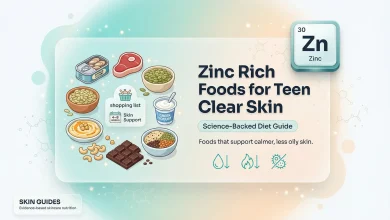
Here’s what most people don’t realize: your skin issues might not be a skincare problem at all. They could be a snack problem. The foods you grab between classes, during study sessions, or while hanging out with friends could be triggering those stubborn breakouts. While our comprehensive guide on the best diet for teenagers’ skin covers overall nutritional strategies, this guide focuses specifically on the snacks that can make or break your skin goals.
This guide offers something different. Science-backed snack solutions that actually work. We’re breaking down a 12-week transformation timeline based on real clinical research, not marketing fluff. You’ll learn exactly which low glycemic snacks for teenage skin can make a measurable difference and why they work.
Ready for your quick win? Here it is: swap your afternoon bag of chips for a handful of mixed nuts today. That single change starts lowering the hormonal cascade that triggers breakouts. It’s not magic. It’s biology. And by the time you finish reading this guide, you’ll understand exactly why.
The Science Made Simple – Why Your Snacks Trigger Breakouts
How Blood Sugar Spikes Sabotage Your Skin
Ever wonder why some people can eat whatever they want while your skin protests at the slightest dietary slip-up? The answer lies in your bloodstream. When you consume foods high in refined carbohydrates, your blood sugar levels spike rapidly. This triggers a hormonal chain reaction that directly affects your skin.
Here’s the simplified version: High-GI foods cause your blood sugar to surge. Your body responds by releasing insulin to manage that glucose. But insulin doesn’t work alone. It also triggers insulin-like growth factor (IGF-1). Together, these hormones increase oil production in your skin and ramp up inflammation. The result? Clogged pores and angry breakouts.
Think of it like this: your skin has tiny oil factories (sebaceous glands). When insulin and IGF-1 levels rise, these factories go into overdrive. They produce more sebum than your pores can handle, creating the perfect environment for acne-causing bacteria to thrive. The American Academy of Dermatology confirms that high-glycemic foods can trigger hormonal fluctuations and inflammation that contribute to acne development, particularly in teenagers with insulin sensitivity issues.
The usual suspects behind these blood sugar spikes include pasta, white rice, white bread, sugary breakfast cereals, baked goods, potato products, and sugar-sweetened beverages. These are often the exact foods that dominate teenage diets and vending machines.
The Glycemic Index Explained in 2 Minutes
The glycemic index (GI) is a simple scoring system that measures how quickly foods raise your blood sugar. The scale runs from 0 to 100, with pure glucose sitting at 100.
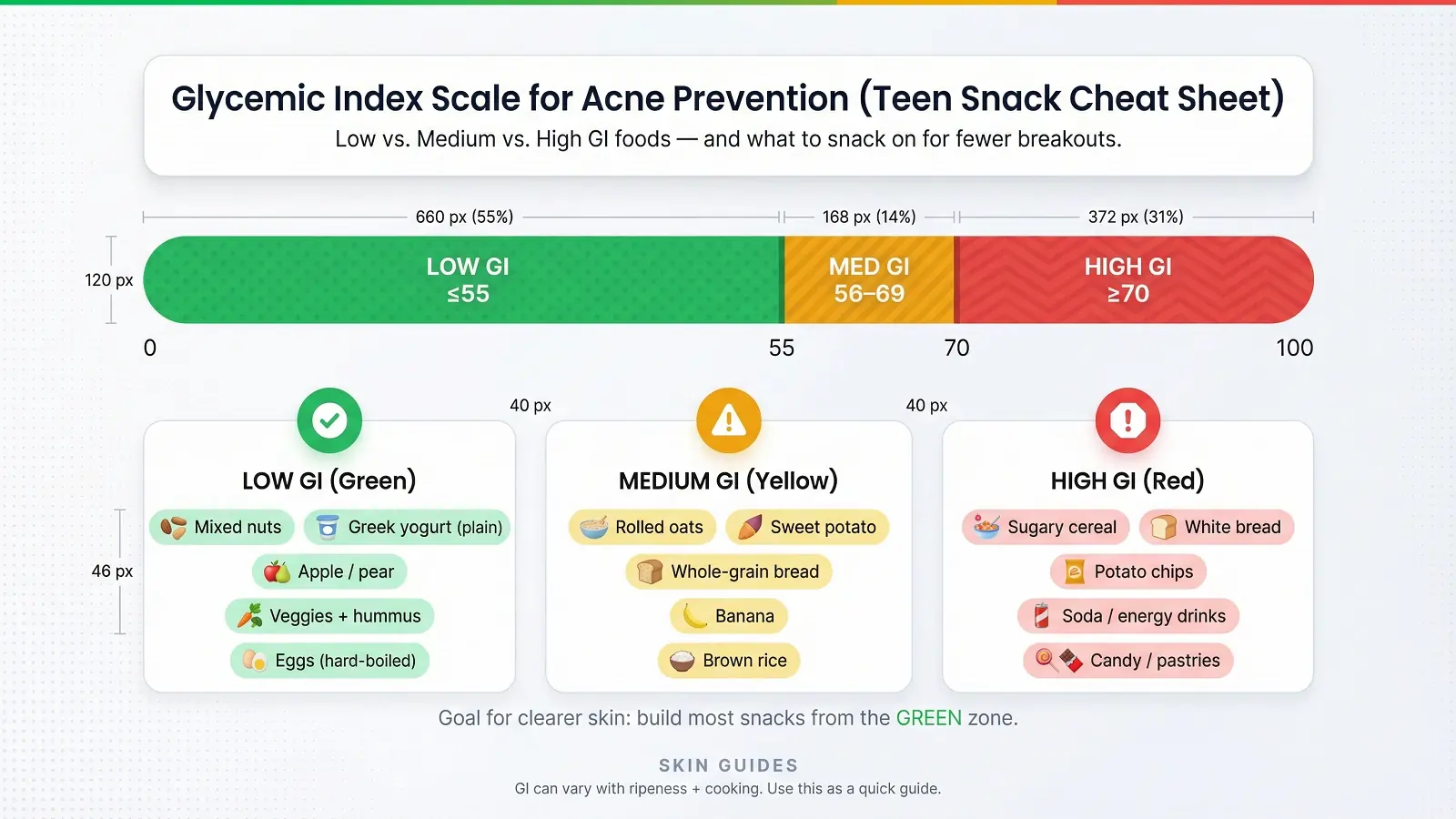
Here’s your quick reference:
- Low GI (55 or less): These foods are digested slowly, causing gradual blood sugar rises. These are your skin-friendly choices.
- Medium GI (56-69): Moderate impact on blood sugar. Occasional consumption is fine.
- High GI (70+): Rapid blood sugar spikes that can trigger the acne cascade.
Why does 55 matter specifically? Foods scoring below this threshold are absorbed slowly enough that your body can manage glucose without flooding your system with insulin. This keeps those acne-triggering hormones in check.
To check the GI values of thousands of foods beyond what we’ve listed here, the University of Sydney’s Glycemic Index Database provides scientifically tested ratings for over 4,000 food items, making it easier to evaluate any snack option you encounter.
The Hormone-Food Connection Teens Need to Know
Puberty is already a hormonal rollercoaster. Your body is producing androgens (hormones that increase oil production) at unprecedented levels. Now add high-GI foods to the mix, and you’ve created the perfect storm for persistent acne.
Research shows that following a low-glycemic diet does more than just prevent spikes. It actually changes your hormonal profile. A low-GL diet reduces free androgens and increases insulin-growth factor-binding protein-3 (IGFBP-3), which essentially puts the brakes on acne-promoting hormones.
This applies regardless of gender. While hormone levels and patterns differ, the blood sugar-acne connection affects everyone going through adolescence.
Your Ultimate Low-GI Snack Arsenal
Best Snacks for Teenage Acne – The Top 20
Finding the best snacks for teenage acne doesn’t mean eating boring foods. It means making smarter choices that taste good and support clear skin. Here’s your comprehensive list, organized by convenience level.
Grab-and-Go Champions (No Prep Required)
These snacks that won’t cause breakouts require zero kitchen time:
- Mixed nuts (almonds, walnuts) have a GI of essentially 0, making them perfect skin food. They’re packed with vitamin E, zinc, and healthy fats that actively support skin health.
- Hard-boiled eggs offer zero-GI protein that keeps you full without affecting blood sugar. Prep a batch on Sunday and grab them all week.
- Low-fat yogurt has a GI of 33 and delivers probiotic benefits that support your gut-skin connection. Choose plain varieties and add fresh berries.
- Fresh fruit like apples and pears score between 35-40 on the GI scale while providing fiber and antioxidants essential for skin repair.
- String cheese alternatives offer portable protein that won’t spike your blood sugar or crowd your backpack.
5-Minute Prep Superstars
When you have slightly more time, these options elevate your snack game:
- Sweet potato rounds with almond butter come in at a GI of 44 and deliver beta-carotene, a nutrient your body converts to skin-healing vitamin A.
- Overnight oats made with rolled oats (GI: 55) provide sustained energy for long study sessions without the crash that triggers cravings for worse options.
- Veggie sticks with hummus offer anti-inflammatory benefits and satisfying crunch. Prep containers on weekends for grab-and-go convenience.
- Berry protein smoothies combine low-GI fruits with protein powder for an antioxidant boost that fights skin inflammation from the inside.
- Quinoa energy balls have a GI of 53 and provide complete protein, meaning all essential amino acids in one portable snack.
Snacks That Won’t Cause Breakouts – School Edition
Locker-Friendly Options
Your locker isn’t temperature-controlled, so you need healthy after school snacks for acne that survive all day. Stock up on 30g portions of unsalted nuts, which won’t spoil and provide steady energy. Dried fruits like apricots, apple slices, and peaches offer natural sweetness without the GI spike of candy.
For discrete eating during class (we’re not encouraging it, but we are realistic), nuts and dried fruit win again. No crinkling wrappers, no strong smells, no mess.
Vending machine survival tip: Look for plain nuts if available or opt for dark chocolate over milk chocolate if you need something sweet. Skip the chips, cookies and sugary drinks entirely.
Cafeteria Survival Guide
Navigate the lunch line strategically:
- Choose whole grain bread over white
- Pick grilled proteins over breaded options
- Load up on vegetables. They’re almost all low-GI
- Skip the fries in favor of a side salad
Here’s a powerful trick: combining protein with carbohydrates slows glucose absorption. That means adding chicken to your pasta or cheese to your crackers actually lowers the overall glycemic impact of your meal.
For drinks, water remains your skin’s best friend. Low-fat milk (GI: 32) works too. Soft drinks? They’re essentially liquid sugar heading straight to your bloodstream and eventually your breakouts.
Making the Switch – Your 7-Day Transformation Plan
Healthy After School Snacks for Acne
Clinical studies showing significant acne improvement used a specific dietary structure: 25% of calories from protein, 30% from fat, and 45% from low-glycemic carbohydrates. You don’t need to count every calorie, but understanding this ratio helps guide better choices.
Monday-Wednesday: The Starter Pack
Start simple. Take your current favorite snacks and make direct swaps:
| Instead of This | Try This | GI Reduction |
|---|---|---|
| White bread | Wholegrain or sourdough bread | 70 to 54 |
| White rice | Basmati or Doongara rice | 72 to 50 |
| Sugary cereals | High-fiber cereals or rolled oats | 80+ to 55 |
| Potato chips | Plain unsalted popcorn | 75 to 55 |
| Soft drinks | Water or low-fat milk | High to 0-32 |
For homework fuel, try apple slices with peanut butter or Greek yogurt with berries. These combinations provide sustained energy without triggering breakouts.
Thursday-Sunday: Level Up
By midweek, you are ready for more adventurous easy low glycemic snacks for teenage skin. Try roasted chickpeas, homemade trail mix or vegetable sushi rolls.
Weekend social situations require strategy. At friend gatherings, offer to bring snacks. That way you control what’s available. Choose restaurants with grilled options when eating out. And remember: one high-GI meal won’t ruin everything, but consistent choices make the difference.
Batch prep Sunday afternoon: hard-boil a dozen eggs, portion out nuts into snack bags, slice vegetables and prepare overnight oats for the week. Twenty minutes of prep saves countless poor decisions.
Advanced Strategies for Stubborn Acne
What Snacks Help Teenage Hormonal Acne
When basic swaps aren’t enough, these hormone-balancing superfoods take your approach to the next level.
Omega-3 rich options deserve special attention. These fatty acids decrease IGF-1 and inhibit pro-inflammatory compounds that worsen breakouts. Prioritize salmon, mackerel, and other fatty fish, along with walnuts and flaxseeds.
Zinc sources help regulate sebum production. Pumpkin seeds make an excellent snack, and lean turkey provides zinc alongside skin-building protein.
Low Inflammation Snacks for Teen Acne
Research confirms that individuals with acne benefit from diets rich in fish and healthy oils that increase omega-3 and omega-6 fatty acid intake. But anti-inflammatory eating extends beyond fish.
Colorful produce fights inflammation naturally. Yellow and orange fruits and vegetables like carrots, apricots, and sweet potatoes provide beta-carotene. Dark leafy greens like spinach offer antioxidants. Tomatoes and blueberries deliver additional protective compounds.
The gut-skin axis also matters. Your digestive system and skin communicate constantly. Studies show that Lactobacillus rhamnosus GG supplementation demonstrated marked improvement in acne. Translation: probiotic-rich foods like yogurt and kefir support clearer skin from within.
Real-World Success Strategies
Acne Diet Snacks for Students
Study Session Fuel
All-nighters happen. When they do, reach for low-fat yogurt (GI: 33), fresh fruit, and nuts. These provide steady energy without the crash that follows energy drinks and candy.
Group study sessions can be challenging when friends bring pizza and chips. Offer to handle snacks sometimes, or simply bring your own alongside whatever’s served.
Sports and Activities
Athletes need more fuel, but that doesn’t mean abandoning your skin goals. Pre-workout, try a banana with almond butter for quick energy. Post-workout, prioritize protein like eggs, lean chicken or fish with a GI of essentially zero to support recovery without triggering breakouts.
Easy Low Glycemic Snacks for Teenage Skin – Social Situations
Movie theaters are minefields. Bring your own nuts or dark chocolate squares. At parties, focus on vegetable platters, cheese cubes, and grilled options while minimizing bread and sugary drinks.
Peer pressure around food is real. You don’t need to announce your dietary changes or explain yourself. Simply choose what works for you without making it everyone’s discussion topic.
Your Questions Answered
Q: How long does it take for low glycemic eating to improve teenage acne?
Clinical studies consistently show significant improvements in 10-12 weeks. Research from RMIT found teenage boys on a higher protein-low GI diet reduced their facial acne by more than 50% after 12 weeks. A landmark study published in the Journal of the American Academy of Dermatology demonstrated significant decreases in both inflammatory and noninflammatory lesions after just 10 weeks, with participants showing improved insulin sensitivity and reduced androgen bioavailability
Q: Can vegetarian teens get enough protein from low GI snacks?
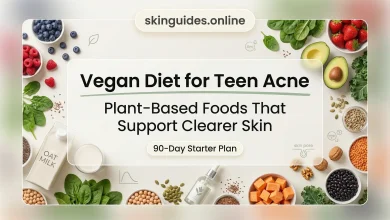
Absolutely. Plant-based protein options include legumes, lentils, chickpeas, tofu, nuts, and seeds. Add these to meals and snacks for complete protein coverage without relying on meat. For a complete plant-based approach to clearing acne, our vegan diet for teen acne guide provides meal plans and additional strategies specifically designed for teenagers following vegetarian or vegan lifestyles.
Q: Are protein bars good or bad for teenage acne?
Check the ingredients carefully. Avoid bars containing whey protein concentrate. Its high leucine content activates pathways linked to acne. Studies show patients who stopped whey protein supplementation saw their acne rapidly clear. Choose plant-based proteins with low added sugars instead.
Q: Do I have to give up fruit completely?
Not at all. Fresh fruits are low GI and provide essential antioxidants, vitamins A, C, and E beneficial for skin health. Aim for three servings daily. One medium piece counts as a serving.
Q: Does chocolate cause acne?
Chocolate has a moderate GI due to its fat content. You don’t need complete avoidance, but milk chocolate consumption was associated with current acne in studies. Dark chocolate in moderation makes a better choice than sugary alternatives.
Your 12-Week Action Plan
Weeks 1-4: Foundation Phase
Focus on basic swaps and building new habits. Follow a simple daily structure: include protein at every meal, choose three servings of low-GI carbohydrates, eat three servings of fruit, and aim for 2½ cups of vegetables.
Track your food choices with an app or journal. Note how your skin responds. Expect some adjustment as your body adapts.
Weeks 5-8: Momentum Phase
Studies show improvements typically begin appearing during this phase. Fine-tune your snack rotation and add variety to prevent boredom. Rotate through pasta (GI: 44-47), basmati rice (GI: 50), and fresh noodles (GI: 40) to keep meals interesting.
Weeks 9-12: Results Phase
This is where clinical studies showed the most dramatic results, the 50%+ improvement in acne. You should notice decreased insulin resistance and lower levels of acne-promoting hormones.
Celebrate improvements, however small. Maintain your new habits rather than reverting to old patterns. Consider these changes permanent rather than temporary.
Conclusion: Your Clear Skin Journey Starts Now
The equation is straightforward: low-GI snacks plus adequate protein equals clearer skin. You now have the knowledge, the specific food recommendations, and a realistic timeline for results.
Remember that a healthy diet with low GI carbohydrates and higher levels of protein is now considered a first-line treatment approach for acne, complementing any creams or treatments your dermatologist recommends.
Your transformation begins with the next snack you choose. Make it count.
Medical Disclaimer: This guide provides educational information based on published research but is not a replacement for professional medical treatment. Consult a dermatologist for personalized acne treatment. Individual results may vary. Research indicates low-GI diets may primarily benefit individuals with underlying insulin resistance, which affects approximately 67-81% of acne patients. Additional treatments may be necessary alongside dietary changes.