Best Vitamins for Skin Health 2026: Glow, Repair, Elasticity & More
Ever spent hundreds on skincare products only to see disappointing results? Here’s what most people miss: truly healthy, glowing skin starts from within.
While serums and creams work on the surface, vitamins and minerals fuel the cellular processes that create radiant, youthful skin. After years of researching skin nutrition and testing countless supplements personally, I’ve identified the vitamins that actually deliver visible results.
In this guide, you will discover exactly which vitamins are good for skin, how they work, optimal dosages and the best food sources to incorporate into your routine.
Quick Answer: What Are the Best Vitamins for Skin Health?
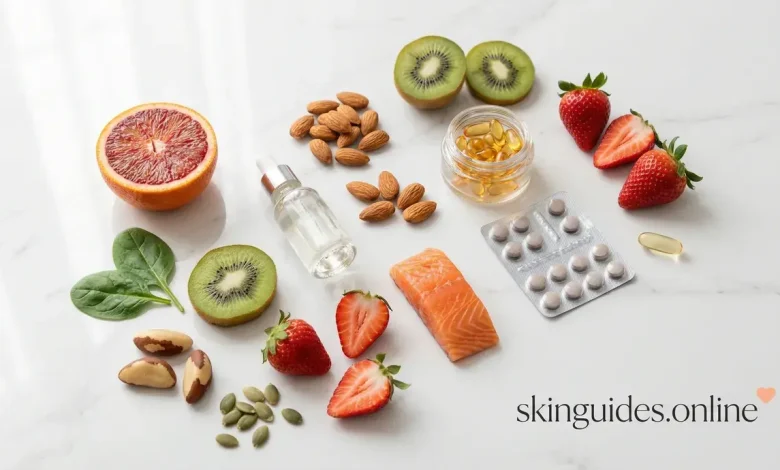
The top 10 vitamins and minerals for healthy skin are:
- Vitamin C: Boosts collagen, brightens skin
- Vitamin E: Protects against sun damage
- Vitamin A: Fights wrinkles, clears acne
- Vitamin D: Supports skin repair
- Vitamin B3 (Niacinamide): Strengthens skin barrier
- Vitamin B7 (Biotin): Maintains skin structure
- Zinc: Fights acne, speeds healing
- Omega-3 Fatty Acids: Hydrates, reduces inflammation
- Vitamin K: Reduces dark circles
- Selenium: Provides antioxidant protection
Now let’s explore each vitamin in detail so you can choose the right ones for your specific skin concerns.
Can Vitamins Really Improve Skin?
Absolutely. Your skin is your largest organ, and like every organ, it requires specific nutrients to function optimally.
Vitamins work at the cellular level to:
- Stimulate collagen production (keeping skin firm and elastic)
- Neutralize free radicals (preventing premature aging)
- Accelerate cell turnover (revealing fresher skin)
- Strengthen the skin barrier (locking in moisture)
Research consistently shows that both oral supplements and topical applications can significantly improve skin health. According to the National Institutes of Health (NIH), vitamin C is essential for collagen biosynthesis and acts as a physiological antioxidant. A 2021 study in the Journal of Clinical and Aesthetic Dermatology found that participants taking vitamin C and E supplements showed measurable improvements in skin hydration and elasticity within 12 weeks.
The key is consistency and choosing the right vitamins for your specific concerns.
The 10 Best Vitamins for Skin Health (Complete Breakdown)

Vitamin C: The Ultimate Brightening Vitamin
Vitamin C is arguably the most important vitamin for skin glow. It’s essential for collagen synthesis and acts as a powerful antioxidant against environmental damage.
Key Benefits:
- Stimulates collagen production
- Fades dark spots and hyperpigmentation
- Brightens dull, tired skin
- Protects against UV damage
Best Food Sources: Citrus fruits, bell peppers, strawberries, kiwi, broccoli
Supplement Dosage: 500-1000mg daily
Pro Tip: Combine oral vitamin C with a topical serum (10-20% concentration) for maximum results. I personally noticed visible brightening within three weeks of consistent use.
Vitamin E: Your Skin’s Protective Shield
Vitamin E works synergistically with vitamin C to provide superior antioxidant protection. It’s particularly effective for vitamins for skin hydration and healing.
Key Benefits:
- Powerful antioxidant protection
- Deep moisturization
- Scar healing support
- UV damage reduction
Best Food Sources: Almonds, sunflower seeds, spinach, avocado
Supplement Dosage: 15mg (22.4 IU) daily
Best For: Dry skin, sun damage repair, scar healing
Vitamin A (Retinoids) The Anti-Aging Powerhouse
When it comes to vitamins for skin elasticity and fighting wrinkles, vitamin A reigns supreme. Retinoids (the active form) accelerate cell turnover, revealing smoother, younger-looking skin.
Key Benefits:
- Reduces fine lines and wrinkles
- Clears acne and prevents breakouts
- Improves skin texture
- Minimizes pore appearance
Best Food Sources: Sweet potatoes, carrots, leafy greens, eggs
Supplement Dosage: 700-900mcg RAE daily (don’t exceed 3,000mcg)
While topical vitamin A retinoids offers powerful anti-aging and acne-fighting benefits, it can also cause irritation, dryness, peeling, and increased sun sensitivity, especially if not used correctly. For a complete breakdown of how vitamin A works on skin, dosage guidelines, and how to avoid common side effects, read our in-depth vitamin A guide here [vitamin A for skin: benefits and side effects]
Vitamin D: The Skin Repair Vitamin
Often overlooked, vitamin D plays a crucial role in skin cell growth, repair, and metabolism. It’s particularly important for vitamins for skin healing.
Key Benefits:
- Supports skin cell regeneration
- Aids wound healing
- May help with psoriasis symptoms
- Supports immune function
Best Sources: Sunlight (10-30 minutes), fatty fish, fortified foods
Supplement Dosage: 600-2000 IU daily (get levels tested first)
Vitamin B3 (Niacinamide) The Barrier Builder
Niacinamide has become a skincare superstar, and for good reason. It’s one of the best vitamins for clear skin and strengthening your skin’s protective barrier.
Key Benefits:
- Reduces redness and blotchiness
- Minimizes pore appearance
- Boosts hydration
- Evens skin tone
Best Food Sources: Chicken, tuna, mushrooms, green peas
Dosage: 14-16mg oral daily; 2-5% in topical serums
Biotin (Vitamin B7): The Structure Supporter
Biotin supports the fatty acids that keep skin cells healthy and properly structured.
Key Benefits:
- Maintains healthy skin cell structure
- Supports overall skin health
- Often improves hair and nails too
Best Food Sources: Eggs, almonds, sweet potatoes, salmon
Supplement Dosage: 30-100mcg daily
Note: Deficiency is rare in healthy individuals.
Zinc: The Acne Fighter
Zinc is essential for vitamins for skin repair and is particularly powerful for acne-prone skin. It regulates oil production and has anti-inflammatory properties.
Key Benefits:
- Controls oil production
- Fights acne-causing bacteria
- Speeds wound healing
- Supports collagen synthesis
Best Food Sources: Oysters, beef, pumpkin seeds, chickpeas
Supplement Dosage: 8-11mg daily (up to 30mg for acne, short-term)
Omega-3 Fatty Acids: The Hydration Heroes
Technically not vitamins, but omega-3s are essential for vitamins for plump skin and deep hydration from within.
Key Benefits:
- Intense hydration
- Reduces inflammation
- Strengthens skin barrier
- Helps eczema and psoriasis
Best Food Sources: Salmon, mackerel, sardines, walnuts, flaxseed
Supplement Dosage: 250-500mg EPA+DHA daily
Vitamin K: The Dark Circle Diminisher
Vitamin K supports blood clotting and circulation, making it effective for reducing dark under-eye circles.
Key Benefits:
- Reduces dark circles
- Supports wound healing
- May minimize bruising
Best Food Sources: Kale, spinach, broccoli, Brussels sprouts
Application: Most effective in topical eye creams
Selenium: The Antioxidant Protector
Selenium is a trace mineral that provides powerful antioxidant protection and supports skin elasticity.
Key Benefits:
- Protects against UV damage
- Supports elasticity
- Antioxidant properties
Best Food Source: Brazil nuts (just 1-2 daily provides full RDA)
Supplement Dosage: 55mcg daily (don’t exceed 400mcg)
Best Vitamins for Your Specific Skin Concern
| Skin Concern | Priority Vitamins | Why It Works |
|---|---|---|
| Dull, Tired Skin | Vitamin C, B3, E | Brightening + antioxidant boost |
| Acne & Breakouts | Vitamin A, Zinc, B3 | Oil control + anti-inflammatory |
| Wrinkles & Aging | Vitamin C, A, E | Collagen + cell turnover |
| Dry, Flaky Skin | Vitamin E, Omega-3, B3 | Deep hydration + barrier repair |
| Dark Spots | Vitamin C, B3 | Melanin regulation + brightening |
| Sensitive Skin | B3, Omega-3, D | Barrier support + anti-inflammatory |
| Slow-Healing Skin | Vitamin E, C, Zinc, K | Regeneration + tissue repair |
Food Sources vs. Supplements: Which Is Better?
The food-first approach is always recommended. Whole foods provide vitamins in their natural form along with co-factors that enhance absorption.
When supplements make sense:
- Dietary restrictions (vegan, allergies)
- Confirmed deficiencies
- Therapeutic doses needed
- Difficulty getting enough from food
My recommendation: Build a foundation with nutrient-rich foods, then supplement strategically to fill gaps.
How Long Until You See Results?
Here’s what to realistically expect:
| Timeline | What You’ll Notice |
|---|---|
| 2-4 weeks | Improved hydration, subtle glow |
| 6-8 weeks | Visible brightness, texture improvement |
| 3-6 months | Significant changes in elasticity, clarity, tone |
Consistency is everything. Taking vitamins sporadically won’t deliver results.
Frequently Asked Questions
What is the single best vitamin for skin health?
Vitamin C is widely considered the most beneficial single vitamin for skin. It boosts collagen, brightens skin, and provides antioxidant protection addressing multiple skin concerns simultaneously.
Can I take all these vitamins together?
Yes, most skin vitamins can be taken together safely. Some even work synergistically vitamin C and E enhance each other’s antioxidant effects.
What vitamins make skin glow naturally?
Vitamin C, vitamin E and niacinamide (B3) are the top vitamins for achieving a natural, radiant glow. Combine these with omega-3s for plump, hydrated skin.
Do vitamins help with acne?
Yes. Vitamin A (retinoids), zinc and niacinamide have strong evidence supporting their effectiveness against acne. Zinc is particularly helpful for inflammatory acne.
Are topical or oral vitamins better for skin?
Both have unique benefits. Oral supplements support skin health systemically, while topical vitamins deliver concentrated benefits directly where needed. The best approach combines both.
Your Action Plan for Healthier Skin
Ready to transform your skin from within? Here’s your starting point:
✅ Start with the basics: Vitamin C + E supplements as your foundation
✅ Eat the rainbow: Prioritize colorful fruits, vegetables, nuts and fatty fish
✅ Target your concerns: Add specific vitamins based on your skin issues (see table above)
✅ Be patient: Give any new regimen at least 6-8 weeks before judging results
✅ Don’t forget the fundamentals: Vitamins work best alongside proper skincare, sunscreen, hydration, and quality sleep
Conclusion: Nourish Your Skin From Within
Achieving healthy, radiant skin is not about finding one miracle product it’s about providing your body with the essential nutrients it needs to regenerate, protect, and glow naturally.
The vitamins we’ve covered Vitamin C, E, A, D, B3, Biotin, Zinc, Omega-3s, Vitamin K and Selenium each play unique roles in maintaining skin health. Whether you are battling acne, fighting signs of aging or simply want that coveted natural glow, these nutrients are your foundation for success.
Remember these key takeaways:
- Food first, supplements second — Prioritize nutrient-dense whole foods before reaching for pills
- Consistency beats intensity — Daily, moderate intake outperforms sporadic mega-doses
- Patience is essential — Real skin transformation takes 6-12 weeks minimum
- Personalize your approach — Choose vitamins based on YOUR specific skin concerns
- Combine internal and external care — Pair supplements with proper skincare and sun protection
Your skin reflects your internal health. When you nourish your body with the right vitamins and minerals, you’re not just improving your appearance you are investing in long-term skin resilience and vitality.
Start simple. Pick two or three vitamins from this list that address your primary concerns. Stay consistent for at least two months. Track your progress with photos.
The journey to healthier skin begins with a single step and that step starts from within.
Disclaimer: This article is for informational purposes only and does not constitute medical advice. Always consult with a healthcare professional or dermatologist before starting any new supplement regimen, especially if you have underlying health conditions or are taking medications.
Have questions about vitamins for skin health? Drop them in the comments below and I will personally respond with recommendations tailored to your concerns.