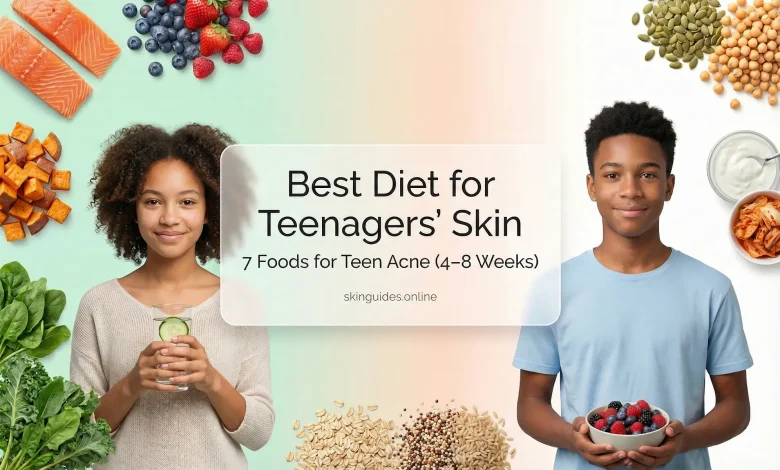
Best Diet for Teenagers’ Skin: 7 Foods for Teen Acne (4–8 Weeks)
Introduction
Tired of breakouts ruining your selfies despite trying every skincare product on the shelf?
You’ve probably spent hours watching skincare routines on TikTok, invested in expensive cleansers, and maybe even borrowed your mom’s fancy serum. Yet somehow, those stubborn pimples keep showing up, especially right before important events.
Here’s what nobody tells you: the best diet for teenagers skin isn’t about expensive supplements or restrictive eating. It’s about feeding your skin the right nutrients to heal acne from the inside out.
Your skin is your body’s largest organ and it reflects everything happening internally. That means what you eat matters just as much, sometimes more, than what you put on your face.
In this guide, you will discover:
- 7 foods scientifically proven to clear teenage acne
- Foods that trigger breakouts (plus easy swaps you will actually make)
- A complete 7-day meal plan you can realistically follow
- An honest timeline for when you’ll see results
Here’s my promise: Follow this guide consistently for 4 weeks, and you will notice clearer, healthier skin. This is not hype or marketing. It’s backed by actual science and the experiences of thousands of teens who’ve cleared their skin through diet changes.
Ready to finally win the battle against breakouts? Let’s dive in.
Why Diet Impacts Teenage Skin
Before we get to the food list, you need to understand why what you eat shows up on your face. This isn’t your mom being dramatic. There is real science behind it.
The Gut-Skin Connection
Your digestive system and your skin are constantly communicating. Scientists call this the “gut-skin axis,” and it explains why your stomach problems often coincide with breakouts
When your gut is unhealthy, filled with bad bacteria, inflammation, or struggling to digest food, it sends distress signals throughout your body. Your skin responds with inflammation, excess oil production, and yes, acne.
This is exactly why topical products alone don’t work for many teens. You can cleanse and moisturize perfectly, but if your gut is a mess, breakouts keep coming back. The best diet for teenagers skin addresses the root cause, not just the symptoms.
Blood Sugar and Breakouts
Ever notice more pimples after a weekend of junk food? That’s the insulin-acne connection at work. According to the American Academy of Dermatology, foods that spike blood sugar can worsen acne significantly.
When you eat foods that spike your blood sugar (think white bread, candy, sugary drinks), your body releases insulin:
- Increased oil production in your skin
- More inflammation throughout your body
- Higher levels of hormones that cause acne
That energy drink giving you a quick boost? It’s also giving your chin breakouts. That afternoon cookie? It’s contributing to tomorrow’s forehead pimples.
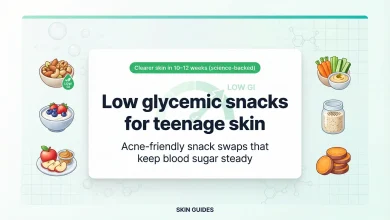
For a complete guide on choosing low glycemic snacks for teenage skin that won’t trigger breakouts, check out our detailed snacking guide
Hormones and Diet
Teenage hormones are already all over the place, that’s just biology. But certain foods make hormonal acne significantly worse.
Some foods contain natural hormones (hello, dairy) that interact with your already-fluctuating teenage hormones. Others trigger your body to produce more androgens, the hormones directly responsible for acne.
For girls, this explains why period breakouts can be brutal. The foods you eat in the week before your period can either calm or intensify those hormonal fluctuations.
The bottom line: Your skin is a mirror reflecting what’s happening inside your body. Fix your diet, fix your skin. It really is that straightforward.
7 Foods That Clear Teenage Acne (Backed by Research)
No single food can “cure” acne for everyone. But research suggests that certain eating patterns especially lower-glycemic meals and anti-inflammatory, nutrient-dense foods may help reduce breakouts for some people over time. Results vary based on hormones, genetics, stress, sleep and skincare but these foods are a strong place to start.
Source: American Academy of Dermatology
Fatty Fish (Salmon, Mackerel, Sardines)
Why it works: Fatty fish are loaded with omega-3 fatty acids, which reduce inflammation by up to 40%. Since acne is fundamentally an inflammatory condition, omega-3s attack the problem directly
How much: Aim for 2-3 servings weekly. A serving is about the size of your palm.
Budget tip: Canned salmon and mackerel work just as well as fresh and cost a fraction of the price. Look for options packed in water, not oil.
Easy wins: Salmon patties, tuna salad on whole grain bread, or simply baked fish with lemon.
Berries (Blueberries, Strawberries, Raspberries)
Why it works: Berries are antioxidant powerhouses. These compounds neutralize free radicals, unstable molecules that damage skin cells and worsen inflammation.
How much: One cup daily is ideal. Fresh or frozen both work.
Easy ways to add them:
- Blend into morning smoothies
- Top your oatmeal or yogurt
- Grab a handful as an afternoon snack
- Mix into overnight oats
Sweet Potatoes
Why it works: Sweet potatoes are rich in beta-carotene, which your body converts to vitamin A. This nutrient speeds up cell turnover, helping your skin shed dead cells faster and preventing clogged pores. Learn more about how vitamin A benefits your skin in our detailed guide.
How much: 3-4 times weekly keeps your vitamin A levels optimal.
Quick prep: Pierce with a fork and microwave for 5-7 minutes. That’s it. Top with a little butter or cinnamon for a satisfying snack or side dish.
Leafy Greens (Spinach, Kale, Swiss Chard)
Why it works: Dark leafy greens contain vitamins A, C, E and K, all essential for repairing damaged skin cells and promoting healthy new cell growth. Vitamin C for skin is particularly powerful for boosting collagen production. They also provide fiber that supports gut health.
How much: 2 cups raw (or 1 cup cooked) daily.
The smoothie hack: If you hate salads, blend spinach into fruit smoothies. Two handfuls disappear completely into a berry smoothie. You won’t taste it, but your skin will thank you.
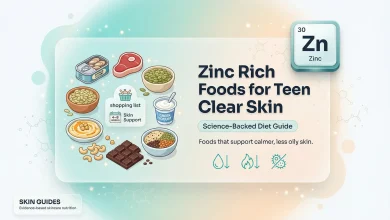
Zinc-Rich Foods (Pumpkin Seeds, Chickpeas, Cashews)
Why it works: Zinc is a mineral that controls oil production and speeds wound healing. Research published in BioMed Research International shows that people with acne often have lower zinc levels than those with clear skin.
Sources: Pumpkin seeds, chickpeas, lentils, cashews, and quinoa. For a complete guide on incorporating these foods into your diet with specific amounts and meal plans, check out our detailed guide on [zinc rich foods for teen clear skin]
Daily amount: A small handful of pumpkin seeds (about 1 ounce) provides roughly 20% of your daily zinc needs.
Snack idea: Keep a bag of pumpkin seeds in your locker or backpack for an easy, skin-clearing snack.
Probiotic Foods (Greek Yogurt, Kefir, Kimchi)
Why it works: Probiotics are beneficial bacteria that balance your gut microbiome. Remember that gut-skin connection? Probiotics strengthen it in your favor.
Sources: Greek yogurt, kefir, kimchi, sauerkraut and miso.
Daily goal: One serving of probiotic-rich food daily.
Dairy-free options: If dairy triggers your acne (more on this later), opt for coconut yogurt with added probiotics, kombucha, or fermented vegetables.
Whole Grains (Oats, Brown Rice, Quinoa)
Why it works: Unlike refined grains, whole grains release energy slowly, preventing the blood sugar spikes that trigger breakouts. They also provide B vitamins essential for skin health.
Smart swaps:
- White rice → Brown rice or quinoa
- White bread → Whole grain bread
- Sugary cereal → Oatmeal
- Regular pasta → Whole wheat pasta
Portion guidance: Replace all refined carbs with whole grain versions. Your blood sugar (and skin) will stabilize within weeks.
Foods That Trigger Teenage Acne
Knowing what to eat is only half the equation. You also need to know what’s sabotaging your skin.
High-Glycemic Foods
The culprits: White bread, sugary cereals, pastries, white rice, instant mashed potatoes, and most processed snacks.
What happens: These foods cause rapid blood sugar spikes, triggering an insulin surge. High insulin increases oil production, inflammation, and the hormones that clog pores.
Better choices:
- Swap sugary cereal for oatmeal with berries
- Choose whole grain bread over white
- Replace chips with air-popped popcorn
- Trade pastries for whole grain toast with almond butter
Dairy Products
Especially problematic: Skim milk, interestingly, causes more breakouts than full-fat versions.
Why: Dairy contains natural hormones from cows, including insulin-like growth factor (IGF-1) and androgens. These hormones don’t disappear during processing, and they interact with your own hormones to trigger acne.
Alternatives to try:
- Oat milk (great in coffee and cereal)
- Almond milk (lowest in calories)
- Coconut milk (creamiest option)
- Cashew milk (excellent for smoothies)
Sugary Drinks
The math: One can of soda contains about 39 grams of sugar. That’s essentially an inflammation bomb for your skin.
The issue extends to: Energy drinks, sweetened coffee drinks, fruit juices (yes, even “100% juice”), and sports drinks.
Smart swaps:
- Water with lemon, cucumber, or berries
- Herbal tea (hot or iced)
- Sparkling water with a splash of juice
- Green tea (bonus anti-inflammatory benefits)
Processed Snacks
The worst offenders: Chips, instant noodles, packaged cookies, frozen pizza, and fast food.
The problem: Trans fats and refined oils in processed foods increase inflammation. Plus, these foods are typically high-glycemic, creating a double attack on your skin.
Better alternatives:
- Nuts and seeds instead of chips
- Fresh fruit instead of candy
- Homemade popcorn instead of microwave versions
- Dark chocolate (70%+ cocoa) instead of milk chocolate
Important reminder: This is not about never eating these foods. It’s about limiting them. The 80/20 rule works well. Eat clean 80% of the time and your skin can handle occasional indulgences.
Your 7-Day Clear Skin Meal Plan
Theory is great, but you need practical application. Here’s a complete week of eating for clearer skin, with options you will actually enjoy.
Days 1-3: Reset Phase
These first days focus on reducing inflammation and stabilizing blood sugar.
Breakfast Options (choose one):
- Overnight oats with blueberries, chia seeds, and a drizzle of honey
- Scrambled eggs with spinach on whole grain toast
- Greek yogurt parfait with berries and a sprinkle of pumpkin seeds
- Smoothie: spinach, banana, frozen berries, almond milk, and flaxseed
Lunch Options (choose one):
- Grilled chicken wrap with avocado, lettuce, tomato in a whole wheat tortilla
- Quinoa bowl with chickpeas, roasted vegetables and lemon tahini dressing
- Turkey and cheese on whole grain bread with carrot sticks
- Leftover salmon with brown rice and steamed broccoli
Dinner Options (choose one):
- Baked salmon with quinoa and roasted broccoli
- Chicken stir-fry with vegetables over brown rice
- Turkey meatballs with whole wheat pasta and marinara
- Black bean tacos with corn tortillas, salsa, and avocado
Snack Options (2-3 daily):
- Apple slices with almond butter
- Greek yogurt with berries
- Handful of mixed nuts
- Carrots and hummus
- Pumpkin seeds
- Hard-boiled egg
Days 4-7: Optimization Phase
Now you’re building on your foundation with more variety.
Breakfast Options:
- Veggie omelet with whole grain toast
- Oatmeal with walnuts, banana, and cinnamon
- Whole grain waffle with berries and a dollop of Greek yogurt
- Smoothie bowl topped with seeds and fresh fruit
Lunch Options:
- Tuna salad (made with olive oil mayo) on whole grain bread
- Buddha bowl with brown rice, edamode, avocado, and vegetables
- Chicken Caesar salad with whole grain croutons
- Lentil soup with a side salad
Dinner Options:
- Grilled mackerel with sweet potato and green beans
- Chicken and vegetable curry over brown rice
- Stuffed bell peppers with ground turkey and quinoa
- Sheet pan salmon with roasted sweet potatoes and asparagus
Daily Non-Negotiables:
✅ 8-10 glasses of water (hydration flushes toxins and plumps skin cells)
✅ 1 probiotic food (yogurt, kefir, or fermented vegetables)
✅ 3+ servings of vegetables (variety of colors)
✅ 1 omega-3 source (fatty fish, walnuts, chia seeds, or flaxseed)
Meal Prep Tips for Busy Teens:
Sunday prep saves your week:
- Cook a batch of brown rice or quinoa
- Roast a sheet pan of vegetables
- Prep overnight oats for 3-4 days
- Wash and cut fruits and vegetables
- Portion nuts and seeds into snack bags
- Bake or grill several chicken breasts
Time-saving tricks:
- Use frozen vegetables (just as nutritious)
- Buy pre-cut fruit when on sale
- Keep canned beans and fish stocked
- Prep lunches the night before
How Long Until You See Results?
Let’s set realistic expectations. This isn’t a “clear skin overnight” miracle. It’s a sustainable transformation.
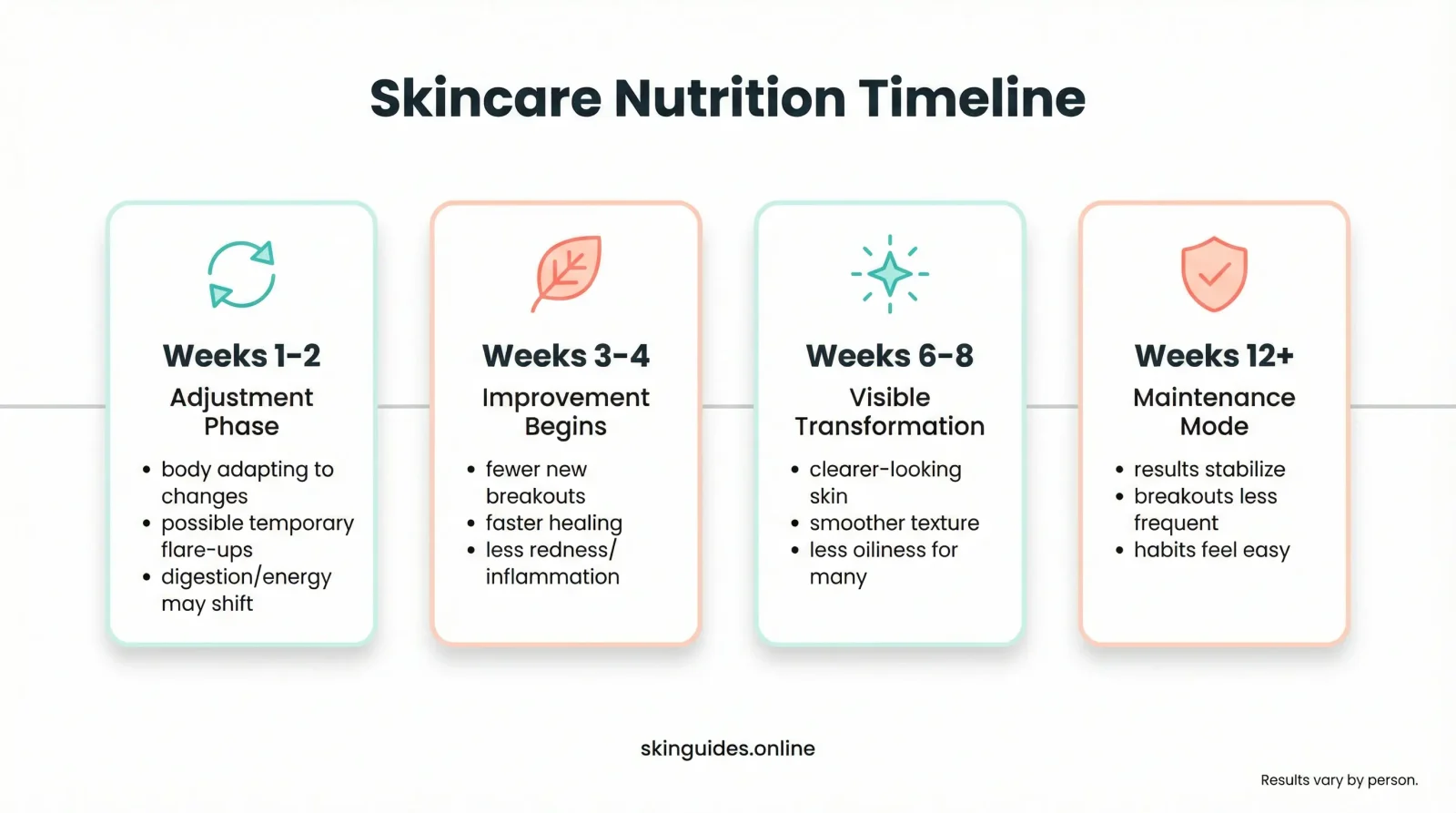
Realistic Timeline:
Weeks 1-2: Adjustment Phase
Your body is adapting to new foods
You might experience an initial breakout (this is normal, toxins are leaving)
Energy levels may fluctuate
Possible digestive changes as gut bacteria shift
Don’t give up here. This phase is temporary
Weeks 3-4: Improvement Begins
Fewer new breakouts appearing
Existing pimples healing faster
Overall inflammation decreasing
Skin tone evening out slightly
This is when the best diet for teenagers skin starts showing results
Weeks 6-8: Visible Transformation
Noticeable reduction in acne
Skin texture improving
Faster healing of any breakouts
Less oiliness in problem areas
Others may start commenting on your skin
Weeks 12+: Maintenance Mode
Significant improvement achieved
New breakouts rare and minor
Skin looks healthier overall
You’ve established sustainable habits
Occasional indulgences don’t derail progress
The Science Behind the Timeline:
Your skin cells take 4-6 weeks to turn over completely. That means the skin you see today started forming over a month ago. Dietary changes affect new cells being created now. You won’t see those cells on the surface for several weeks.
This is why consistency matters more than perfection. One bad meal won’t ruin your progress, but one good week won’t fix everything either. Commit to 4 weeks minimum before judging results.
Making It Work in Real Life
The best diet plan means nothing if you can’t follow it. Here’s how to make clear-skin eating work in your actual life.
At School:
Morning routine:
- Pack lunch the night before (takes 10 minutes)
- Prep breakfast ingredients for quick assembly
- Grab a filled water bottle on your way out
During the day:
- Keep emergency snacks in your locker (nuts, seeds, dried fruit)
- Choose grilled options over fried in the cafeteria
- Carry your water bottle between classes
- Avoid the vending machine by having snacks ready
With Friends:
Social situations:
- Follow the 80/20 rule. You don’t need to be perfect
- Don’t announce you’re “on a diet” (invites unwanted comments)
- Make smart swaps quietly: water instead of soda, grilled instead of fried
- Eat one slice of pizza instead of three
- Choose restaurants with healthy options when it’s your pick
Handling pressure:
- “I’m just not that hungry” works for declining seconds
- Order what you want; no explanation needed
- Focus on the social aspect, not the food
- Remember: one meal won’t make or break your skin
On a Budget:
The best diet for teenagers skin doesn’t require expensive specialty foods.
Money-saving strategies:
- Buy frozen fruits and vegetables (same nutrition, lower cost)
- Purchase nuts and seeds in bulk
- Canned salmon and tuna are budget-friendly omega-3 sources
- Seasonal produce costs less and tastes better
- Store brands are usually identical to name brands
- Dried beans and lentils are incredibly cheap protein
- Oats are one of the cheapest healthy breakfasts available
When You’re Crazy Busy:
Realistic approaches:
- Meal prep on Sundays (2 hours saves time all week)
- Keep it simple. Complicated recipes lead to takeout
- Batch cook grains and proteins
- Stock healthy convenience foods: pre-washed salad, rotisserie chicken, canned beans
- Smoothies take 3 minutes and pack nutrition
- Overnight oats require zero morning effort
Frequently Asked Questions
Q: Will the best diet for teenagers skin work for everyone?
A: Most teens see noticeable improvement within 4-8 weeks. However, severe cystic acne often has strong genetic and hormonal components that diet alone can’t fully address. In these cases, dietary changes help but may need to be combined with medical treatment from a dermatologist.
Q: Can I still eat chocolate?
A: Yes! Dark chocolate with 70% or higher cocoa content is actually beneficial. It contains antioxidants and minimal sugar. Milk chocolate and white chocolate are the problematic ones. Enjoy a few squares of dark chocolate guilt-free.
Q: How do I know if dairy is affecting my skin?
A: Try a complete dairy elimination for 3-4 weeks. This means no milk, cheese, yogurt, ice cream, or hidden dairy in processed foods. Take photos weekly. If your skin improves, dairy is likely a trigger. You can then test specific dairy products to see which ones affect you most.
Q: What if I’m vegetarian or vegan?
A: You can absolutely follow this plan without meat or animal products. For a complete plant-based approach, check out our detailed guide on vegan diet for teen acne which covers everything you need to know about clearing skin on a vegan diet.
- Get omega-3s from walnuts, chia seeds, flaxseed, and algae supplements
- Source zinc from pumpkin seeds, legumes, and fortified cereals
- Obtain vitamin A from orange vegetables (sweet potatoes, carrots, squash)
- Use plant-based probiotics like kimchi, sauerkraut, and coconut yogurt
Q: Do I need supplements?
A: Food should always come first. Nutrients from whole foods absorb better than supplements. However, consider supplementing vitamin D if you don’t get much sun exposure, or omega-3s if you rarely eat fish. Always check with a healthcare provider before starting supplements.
Q: What about drinking water, does it really help?
A: Absolutely. Proper hydration helps your body flush toxins, delivers nutrients to skin cells, and maintains skin elasticity. Aim for 8-10 glasses daily. Your urine should be light yellow. Darker means you need more water.
Q: Will I have to eat this way forever?
A: Once your skin clears, you will have more flexibility. Most teens find they can maintain results with less strict eating, as long as they don’t return to their old habits completely. Think of it as establishing a baseline that becomes second nature.
Q: How can a 15 year old get clear skin?
A: A 15 year old can get clear skin by focusing on three key areas. First, eat skin-clearing foods like fatty fish, berries, leafy greens, and whole grains while limiting dairy, sugary drinks, and processed snacks. Second, stay hydrated with 8-10 glasses of water daily. Third, maintain a simple skincare routine with gentle cleanser and moisturizer. Combine these habits with 7-8 hours of sleep each night and give your body 4-6 weeks to show improvement.
Conclusion: Start Your Clear Skin Journey Today
The best diet for teenagers skin isn’t about perfection. It’s about consistency. You don’t need to overhaul everything overnight or never eat pizza again. You need to make better choices most of the time and stick with them long enough to see results.
You now have:
✅ Seven proven foods that fight acne from within
✅ Clear understanding of which foods to limit
✅ A complete, realistic meal plan
✅ Honest timeline for results
✅ Strategies for making it work in real life
Your Action Plan for This Week:
- Start with ONE change today (swap sugary drinks for water)
- Add one skin-clearing food daily (berries in your morning routine)
- Reduce one trigger food (not eliminate, just reduce)
- Track progress with weekly selfies (same lighting, same angle)
- Be patient with yourself and the process
Remember: every healthy meal is a vote for clearer skin. You’re not trying to be perfect. You’re trying to be consistent. The teens who succeed aren’t the ones who follow every rule perfectly for a week and then give up. They’re the ones who make good choices most of the time, forgive themselves for slip-ups, and keep going.
Your skin didn’t develop problems overnight, and it won’t clear overnight either. But four weeks from now, you’ll be glad you started today.
You’ve got this! 💪
Disclaimer
This article provides general information about the best diet for teenagers skin and is not a substitute for professional medical advice. If you have severe acne, underlying health conditions, or don’t see improvement after 8-12 weeks, consult a dermatologist or registered dietitian. Individual results vary based on genetics, hormones, and overall health.