Anti-Aging Diet for Skin [2026]: 7-Day Meal Plan for Radiance
Introduction
Anti Aging Diet for Skin starts in your kitchen, where everyday foods can deliver more anti-aging power than any expensive serum sitting on your bathroom counter. While the beauty industry pushes $200 creams promising miraculous results, research published in the Journal of the American Academy of Dermatology confirms what nutritionists have known for decades: what you eat directly impacts how your skin ages.
A 2020 study from Erasmus University found that participants following a nutrient-dense diet showed significantly fewer wrinkles than those consuming processed foods. The connection between diet for younger looking skin isn’t just marketing it’s science.
In this comprehensive guide, you will discover the foods that prevent skin aging, understand exactly how certain nutrients protect your complexion and learn which anti-wrinkle diet foods deserve a permanent spot in your refrigerator. Whether you are battling fine lines, dryness, or loss of elasticity, your plate is about to become your most powerful beauty tool.
Looking for gender-specific advice? While this guide covers anti-aging nutrition for everyone, men have unique skin concerns due to testosterone, thicker skin, and faster collagen loss after 30. If you’re a guy looking to combat aging skin through diet, check out our detailed guide on the best diet for men’s skin which includes a complete 7-day meal plan tailored specifically for male skin health and anti-aging needs
The Science Behind Skin Aging Nutrition
How Does Diet Affect Skin Aging?
Understanding skin aging nutrition starts at the cellular level. Three primary mechanisms drive visible aging, and each connects directly to what you consume.
Oxidative stress and cellular damage occur when free radicals overwhelm your body’s defense systems. Oxidative stress skin damage manifests as dark spots, wrinkles, and loss of firmness. Every time you skip antioxidant-rich foods, you’re essentially leaving your skin defenseless against environmental attackers.
The collagen degradation diet connection is equally crucial. Your body produces less collagen naturally after age 25, but certain foods accelerate this breakdown while others support ongoing synthesis. Without adequate nutritional support, collagen fibers weaken and fragment, leading to sagging and wrinkles.
Chronic inflammation represents the third aging accelerator. When your diet triggers inflammatory responses, your skin pays the price through premature aging, redness and compromised healing.
Understanding AGEs and Glycation
AGEs and skin aging represents one of the most significant dietary discoveries in dermatology research. Advanced Glycation End Products form when proteins or fats combine with sugars a process accelerated by high-heat cooking and sugar consumption.
The relationship between glycation and wrinkles is direct and measurable. When AGEs accumulate in skin tissue, they cross-link with collagen fibers, making them stiff and inflexible. This process, sometimes called sugar sag skin, explains why high-sugar diets correlate with premature aging.
Foods that accelerate glycation include:
- Grilled or fried meats cooked at high temperatures
- Processed snacks containing high-fructose corn syrup
- Caramelized or charred foods
Conversely, foods cooked at lower temperatures with moisture (steaming, poaching) produce fewer AGEs, protecting your collagen from accelerated damage.
Essential Nutrients for Younger-Looking Skin
Collagen Boosting Nutrients
A collagen boosting diet prioritizes three essential components that your body requires for collagen synthesis.
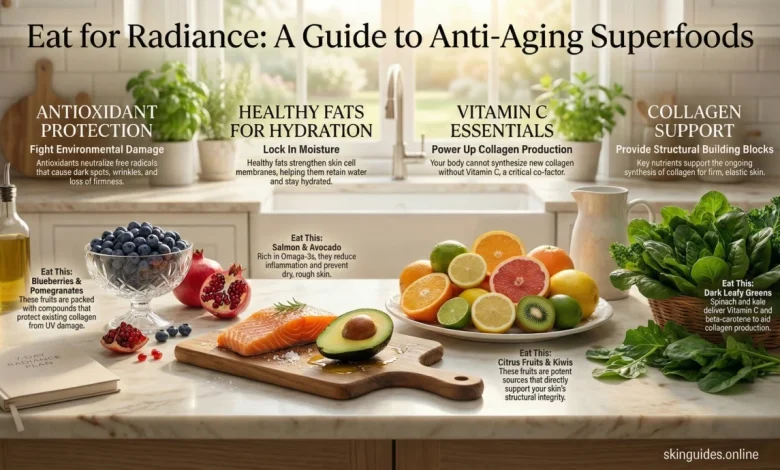
Vitamin C skin benefits extend far beyond immune support. This essential nutrient serves as a co-factor in collagen production, meaning your body literally cannot synthesize collagen without it. Vitamin C foods for collagen synthesis include bell peppers, kiwis, strawberries, and citrus fruits. Research suggests consuming 75-90mg daily for women and men respectively.
Amino acids particularly glycine, proline, and hydroxyproline provide the building blocks for collagen structure. Complete proteins from eggs, fish and poultry deliver these amino acids efficiently.
Copper and zinc play supporting roles that many people overlook. Copper activates lysyl oxidase, an enzyme essential for collagen cross-linking, while zinc supports protein synthesis and wound healing. Equally important but often missed is vitamin D for skin health, which research shows directly supports collagen synthesis, regulates skin cell turnover, and provides anti-inflammatory benefits that protect against premature aging.
Antioxidant Powerhouses
Dietary antioxidants for skin create a protective shield against environmental damage.
Vitamin E skin repair mechanisms work by neutralizing free radicals in cell membranes and supporting the skin’s lipid barrier. Almonds, sunflower seeds, and avocados provide excellent sources.
Beta-carotene skin elasticity benefits come from its conversion to vitamin A, which promotes cell turnover and collagen production. Sweet potatoes, carrots, and leafy greens deliver this crucial nutrient.
Polyphenols for skin and flavonoids skin protection deserve special attention. These plant compounds found in berries, tea, and dark chocolate demonstrate remarkable ability to protect against UV damage and improve skin density.
Healthy Fats for Skin Hydration
The connection between healthy fats collagen production and skin hydration cannot be overstated.
Omega-3 reduce inflammation throughout the body, including skin tissue. These essential fatty acids also strengthen cell membranes, helping skin retain moisture. Fatty fish like salmon, mackerel, and sardines provide optimal sources.
Linoleic acid skin hydration benefits include maintaining the skin’s barrier function. Without adequate linoleic acid, skin becomes dry, rough, and prone to irritation. Seeds, nuts, and vegetable oils provide this essential fatty acid.
Monounsaturated fats from olive oil and avocados support absorption of fat-soluble vitamins while providing anti-inflammatory benefits.
Comparison Table: Key Nutrients and Their Skin Benefits
| Nutrient | Primary Skin Benefit | Top Food Sources |
|---|---|---|
| Vitamin C | Collagen synthesis | Bell peppers, citrus, strawberries |
| Vitamin E | Free radical protection | Almonds, sunflower seeds, avocado |
| Omega-3s | Inflammation reduction | Salmon, sardines, walnuts |
| Beta-carotene | Elasticity support | Sweet potatoes, carrots, spinach |
| Zinc | Wound healing | Oysters, pumpkin seeds, beef |
| Polyphenols | UV protection | Berries, green tea, dark chocolate |
Top Foods That Fight Skin Oxidative Stress
Antioxidant-Rich Fruits
Understanding how berries antioxidants skin aging connection works helps appreciate why dermatologists consistently recommend these superfoods. Berries rank among the high in antioxidants berries foods precisely because they contain concentrated anthocyanins powerful compounds that neutralize free radicals.
Foods to fight free radicals skin damage include:
- Blueberries: Contain anthocyanins that protect collagen from UV damage
- Strawberries: Provide more vitamin C per serving than oranges
- Pomegranates: Rich in punicalagins that support collagen regeneration
- Grapes: Contain resveratrol, which fights glycation
Citrus fruits skin protection comes from their vitamin C content plus flavonoids that enhance UV defense.
Power Vegetables
Leafy greens collagen production benefits stem from their vitamin C, beta-carotene, and chlorophyll content. Spinach, kale and Swiss chard provide nutrient density difficult to match.
Carotenoids for skin health accumulate in your skin after consistent consumption, creating measurable protection against sun damage. Studies show that beta-carotene supplementation can increase the skin’s resistance to sunburn.
Phytochemicals for skin protection work synergistically when consumed from whole foods. Sweet potato skin benefits include high beta-carotene content and vitamin C, while bell peppers vitamin C content surpasses most fruits ounce-for-ounce.
Protein Sources for Skin Structure
Protein intake elastin and collagen production requires adequate amino acid consumption. Fish and omega-3s provide dual benefits structural protein plus anti-inflammatory fats.
For those exploring a plant-based diet for skin elasticity, combining legumes with whole grains ensures complete amino acid profiles. Tofu, tempeh and edamame offer excellent alternatives.
The bone broth controversy deserves mention: while marketers claim collagen-rich broths directly improve skin, research suggests your body breaks down ingested collagen into amino acids. However, these amino acids do support your body’s own collagen production.
Foods That Cause Premature Skin Aging
The Sugar-Skin Connection
Understanding what foods cause premature skin aging starts with sugar’s impact on your complexion. The glycation process described earlier accelerates whenever blood sugar spikes.
Hidden sugars lurk in:
- Flavored yogurts
- Granola bars
- Pasta sauces
- Salad dressings
- “Healthy” smoothies
Processed foods skin damage extends beyond sugar content. Many packaged foods contain trans fats, artificial additives and preservatives that trigger inflammatory responses.
When evaluating sugar alternatives, focus on naturally sweet foods like berries rather than artificial sweeteners, which may disrupt gut bacteria and indirectly affect skin health.
Inflammatory Foods to Limit
The connection between fried foods wrinkles comes from both AGE formation during high-heat cooking and inflammatory omega-6 fatty acid content.
Foods that reduce skin inflammation generally exclude:
- Trans fats found in fried and processed foods
- Excessive alcohol, which dehydrates and depletes nutrients
- High-sodium processed foods that cause water retention and puffiness
Moderation matters more than perfection. Occasional indulgences won’t destroy your complexion, but consistent consumption of inflammatory foods accelerates visible aging.
Creating Your Anti-Aging Eating Plan
Sample Daily Meal Plan
What is the best breakfast for anti-aging skin? Start with protein, healthy fats and antioxidant-rich foods. Consider:
- Greek yogurt with berries and walnuts
- Avocado toast on whole grain bread with poached eggs
- Smoothie with spinach, berries, collagen peptides, and chia seeds
Lunch template: Leafy green base + lean protein + healthy fat + colorful vegetables
Dinner template: Fatty fish or plant protein + roasted vegetables + whole grains
An eating plan for skin dryness emphasizes omega-3 rich foods and water-dense vegetables. A whole foods diet for glowing skin eliminates processed items in favor of nutrient-dense alternatives.
Meal Prep Strategies
Batch cooking tips for skin health:
- Roast vegetables at 375°F rather than high heat to minimize AGE formation
- Prepare overnight oats with chia seeds and berries
- Cook salmon filets for multiple meals
Storage for nutrient preservation: Vitamin C degrades with air exposure, so consume freshly cut fruits and vegetables promptly. Store leafy greens with paper towels to maintain freshness.
Sample 7-Day Meal Plan Table

| Day | Breakfast | Lunch | Dinner |
|---|---|---|---|
| Mon | Berry smoothie bowl | Salmon salad | Grilled chicken with sweet potatoes |
| Tue | Eggs with avocado | Quinoa vegetable bowl | Mackerel with steamed broccoli |
| Wed | Overnight oats with walnuts | Spinach and lentil soup | Tofu stir-fry (low heat) |
| Thu | Greek yogurt parfait | Tuna salad on greens | Grass-fed beef with roasted vegetables |
| Fri | Green smoothie | Chickpea curry | Baked salmon with asparagus |
| Sat | Vegetable omelet | Mediterranean bowl | Grilled sardines with salad |
| Sun | Acai bowl | Turkey and avocado wrap | Slow-cooked chicken with vegetables |
Natural Anti-Aging Foods for Specific Skin Concerns
For Dry, Dehydrated Skin
Hyaluronic acid foods natural sources include bone broth, soy products and root vegetables. While your body produces hyaluronic acid naturally, supporting nutrients help maintain production.
Nutrition for skin barrier repair emphasizes fatty acids and hydration. Water-rich foods cucumbers, watermelon, celery contribute to internal hydration.
Learn more about [dietary antioxidants like vitamin C for skin protection from the NIH]
For UV Protection
UV light diet protection research shows that specific foods can enhance your skin’s natural defenses. Tomatoes, rich in lycopene, demonstrate measurable photoprotection after consistent consumption.
A diet for photoaging prevention includes:
- Tomato paste (cooked increases lycopene availability)
- Green tea
- Dark chocolate (70%+ cacao)
- Carrots and sweet potatoes
For Fine Lines and Wrinkles
A fine lines diet prioritizes collagen-supporting nutrients. Focus on vitamin C, amino acids, and antioxidants that protect existing collagen from degradation.
For sagging skin diet support, emphasize protein intake and nutrients that support elastin production, including zinc and copper.
Natural anti-aging foods for face include those providing comprehensive nutrient profiles: salmon, avocados, berries, and leafy greens.
Supplements vs. Whole Foods
While nutrient-rich foods for skin health should form your foundation, supplements might help when:
- Dietary restrictions limit food choices
- Blood tests reveal specific deficiencies
- Consistent food access presents challenges
However, whole foods offer advantages supplements cannot replicate. Synergistic compounds work together in ways isolated nutrients don’t. Additionally, what vitamins prevent skin wrinkles research consistently shows better outcomes from dietary sources than supplements.
Evidence-based recommendations: Prioritize food first, supplement strategically, and always consult healthcare providers before adding supplements.
Frequently Asked Questions
Q: Can diet reverse skin aging?
Diet cannot reverse existing damage completely, but consistent nutritional support can slow progression and improve appearance. Research shows measurable improvements in skin elasticity and hydration within weeks of dietary changes.
Q: Does eating collagen help skin?
Studies show mixed results. While some research demonstrates improved skin hydration and elasticity with collagen peptide supplementation, your body breaks down ingested collagen during digestion. The resulting amino acids support your body’s collagen production.
Q: What foods increase collagen production naturally?
- Citrus fruits (vitamin C for synthesis)
- Egg whites (proline amino acid)
- Berries (antioxidant protection)
- Garlic (sulfur for collagen structure)
- Leafy greens (chlorophyll and vitamin C)
- Fish (amino acids and omega-3s)
Q: How long before I see results from dietary changes?
Realistic timeline: Skin cell turnover takes approximately 28 days. Expect initial improvements in hydration within 2-3 weeks, with more significant changes in texture and elasticity appearing at 6-12 weeks of consistent dietary changes.
Q: Can cutting sugar improve skin?
Yes. Research published in Clinical Dermatology confirms that reduced sugar intake decreases glycation, allowing collagen to maintain flexibility. Participants reducing sugar consumption showed improved skin texture within six weeks.
Q: Does vitamin C help with wrinkles?
Scientific evidence strongly supports vitamin C’s role in wrinkle prevention and treatment. As a required co-factor for collagen synthesis, adequate vitamin C intake directly impacts skin’s structural integrity.
Q: an a plant-based diet improve skin?
A well-planned plant-based diet rich in antioxidants, healthy fats, and complete proteins can significantly benefit skin health. However, attention to vitamin B12, omega-3s, and zinc is essential for optimal results.
Conclusion
The evidence is clear: your diet profoundly impacts how your skin ages. From fighting oxidative stress with antioxidant-rich berries to supporting collagen production with vitamin C, every meal presents an opportunity to nourish your complexion from within.
Start with small changes add berries to breakfast, swap fried foods for steamed alternatives, and incorporate fatty fish twice weekly. These simple shifts compound over time, creating visible improvements that no topical product can replicate.
Your skin reflects your internal health. Feed it well and it will reward you with the radiant, youthful complexion you deserve. Begin today your future self will thank you.
Disclaimer:
This article is for informational purposes only and does not constitute medical advice. Consult a healthcare professional before making any dietary changes, especially if you have existing health conditions or are taking medications.