Zinc Rich Foods for Teen Clear Skin: The Science-Backed Diet Guide That Actually Works
Introduction: The Zinc-Clear Skin Connection Your Teen Needs to Know
If your teenager is battling persistent acne despite trying every face wash and cream, the solution might be sitting in your kitchen right now. Zinc rich foods for teen clear skin are emerging as a science-backed alternative to expensive treatments, with research revealing that these dietary powerhouses could be the missing piece in your teen’s acne puzzle. While the skincare industry pushes costly solutions, zinc-rich foods offer a natural approach that actually addresses the root cause of teenage breakouts.
Studies indicate that zinc deficiency is common among acne-prone teenagers, a concerning statistic that explains why topical treatments alone often fail. The breakthrough? Research demonstrates that dietary zinc for puberty acne can significantly reduce breakouts within 4-8 weeks when consumed orally without harsh medications or expensive dermatologist visits.
In this comprehensive guide, you will discover 15 zinc-rich foods teenagers actually enjoy eating as part of the best diet for teenagers’ skin, learn the exact daily zinc intake for teen skin health, and get a simple meal plan that seamlessly fits into any teenager’s lifestyle. Most importantly, you will understand exactly when to expect visible results and how to maximize zinc absorption for faster skin clearing.
Why Zinc is Your Teen’s Secret Weapon Against Acne
How Zinc Fights Acne at Every Level
Understanding how zinc combats acne helps explain why zinc deficiency and teenage breakouts are so closely linked. This essential mineral attacks acne through four powerful mechanisms that work synergistically to clear skin from the inside out.
1.1 Sebum Production Regulation
Zinc directly reduces oil production by controlling sebaceous glands, the tiny factories in your skin that produce sebum. It works by blocking 5-alpha-reductase, the enzyme responsible for converting testosterone into DHT the hormone that triggers excess sebum production. When taken orally, zinc typically shows initial effects within 4 weeks, while topical zinc applications may show results in as little as 2 weeks for surface-level oil control, particularly in the T-zone area where breakouts commonly occur.
1.2 Anti-Inflammatory Properties
The anti-inflammatory properties of zinc are particularly effective against those angry, red pimples that seem to appear overnight. Zinc suppresses inflammatory cytokines—the chemical messengers that cause redness and swelling of inflammatory lesions. This mineral essentially calms the skin’s immune response, reducing the size and pain of cystic acne while preventing post-inflammatory hyperpigmentation that often follows severe breakouts. Research confirms that inflammatory acne (red, painful pimples) responds significantly better to zinc therapy than comedonal acne (blackheads and whiteheads), according to studies published in the Journal of Dermatological Science.
1.3 Antibacterial Action Against Propionibacterium acnes
Zinc creates an inhospitable environment for Propionibacterium acnes, the bacteria primarily responsible for acne infections. By disrupting bacterial cell membranes and interfering with their metabolic processes, zinc prevents bacterial colonization in pores while reducing infection risk in existing breakouts. This antibacterial effect is comparable to some topical antibiotics, but without the risk of antibiotic resistance.
1.4 Hormonal Balance During Puberty
Perhaps most importantly for teenagers, zinc helps modulate androgen reduction naturally during the turbulent hormonal fluctuations of puberty. It stabilizes hormone levels that typically surge during adolescence, making it especially effective for hormonal balance teenagers struggle with. This is why zinc particularly helps with hormonal acne that appears along the jawline and chin area.
The Teenage Zinc Deficiency Epidemic
Modern teenagers face a perfect storm of factors that deplete zinc stores. Rapid growth during puberty increases zinc requirements by up to 40%, while the typical teen diet heavy in processed foods lacks bioavailability minerals necessary for optimal health. Additionally, stress from academic pressure and social challenges further increases zinc requirements, while phytates zinc absorption issues from whole grains and legumes can block up to 50% of dietary zinc from being absorbed.
Zinc deficiency symptoms particularly relevant to teenagers include stunted growth (especially in adolescents), delayed puberty, skin changes resembling eczema, hair loss, poor wound healing and weakened immunity, as detailed by the American Academy of Dermatology.
Top 15 Zinc-Rich Foods for Clear Teen Skin (Ranked by Effectiveness)
Tier 1: Zinc Superstars (Fastest Results)
1. Oysters – The Ultimate Source
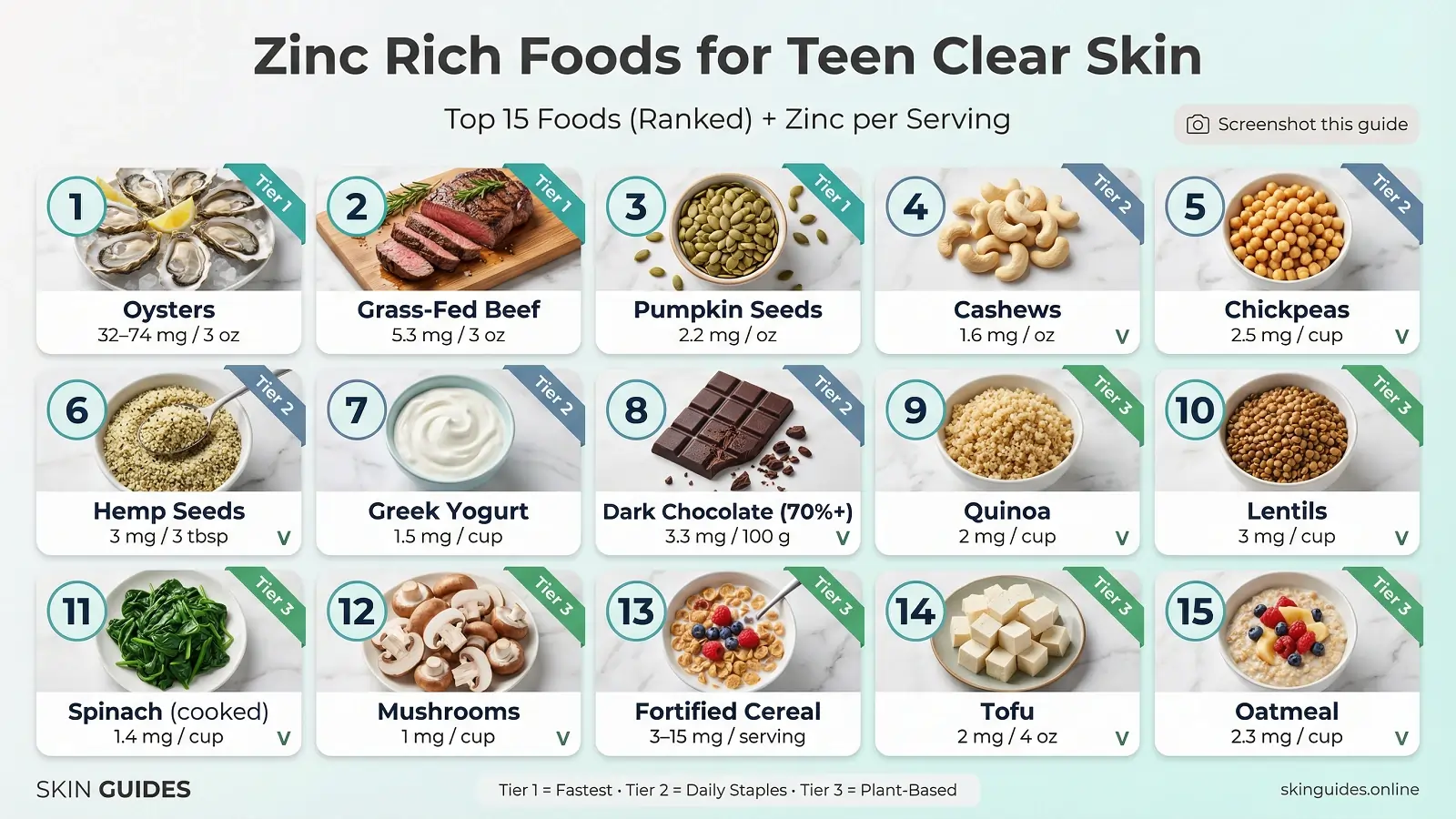
Oysters contain approximately 32-74mg of zinc per 3oz serving (varying by type and preparation), making them the richest natural source according to the USDA FoodData Central Database. among zinc sources for hormonal acne. While most teenagers won’t eagerly consume raw oysters, canned smoked oysters mixed into pasta sauce or added to pizza can make this superfood more palatable. Even eating oysters once weekly can significantly boost zinc status.
2. Grass-Fed Beef – The Practical Champion
Delivering 5.3mg per 3oz burger, grass-fed beef offers the highest absorption rate (35%) among common foods. Teen-friendly preparations include tacos, meatballs, spaghetti bolognese and burger sliders. The heme iron in beef also enhances zinc absorption, making it particularly effective for rapid results.
3. Pumpkin Seeds – The Snackable Solution
These versatile seeds provide 2.2mg per ounce while offering additional skin cell turnover nutrients. Roasted with sea salt, mixed into trail mix, or blended into smoothies, pumpkin seeds nutrition extends beyond zinc to include omega-3 fatty acids and vitamin E for comprehensive skin support.
Tier 2: Daily Staples (Consistent Support)
4. Cashews
At 1.6mg per ounce, cashews make perfect school snacks that won’t embarrass your teen. Their mild, creamy flavor works in both sweet and savory applications.
5. Chickpeas
Providing 2.5mg per cup, chickpeas transformed into hummus offer a trendy lunch option that delivers sustained zinc throughout the day.
6. Hemp Seeds
These tiny powerhouses pack 3mg per 3 tablespoons, easily hidden in smoothies without altering taste—perfect for picky eaters.
7. Greek Yogurt
With 1.5mg per cup plus probiotics for gut health, Greek yogurt serves as an ideal breakfast base that supports zinc absorption.
8. Dark Chocolate (70%+)
Surprisingly, dark chocolate contains 3.3mg per 100g, making it a guilt-free treat that actually benefits skin health.
Tier 3: Plant-Based Zinc for Clear Skin
For vegetarian zinc sources for acne, these options provide reliable alternatives. If you’re following a completely plant-based approach, check our guide on vegan diet for teen acne for additional strategies. Research confirms that people with acne often have lower levels of zinc in their blood, which may partly explain their susceptibility to breakouts. Plant-based eating patterns emphasizing legumes, nuts, seeds, and whole grains can provide adequate zinc when consumed consistently throughout the day.
9. Quinoa
This complete protein delivers 2mg per cup while providing all nine essential amino acids for skin repair.
10. Lentils
Budget-friendly at 3mg per cup, lentils offer versatile meal options from soups to veggie burgers.
11. Spinach
Cooked spinach provides 1.4mg per cup plus vitamin A transport cofactors essential for zinc utilization. Learn more about how vitamin A for skin works synergistically with zinc.
12. Mushrooms
With 1mg per cup, mushrooms add umami flavor while supporting immune function.
13. Fortified Cereals
Ranging from 3-15mg per serving, fortified cereals offer convenient breakfast solutions.
14. Tofu
This versatile protein provides 2mg per 4oz serving, easily absorbing flavors in any cuisine.
15. Oatmeal
Delivering 2.3mg per cup, oatmeal’s low glycemic index foods benefit helps stabilize blood sugar, reducing acne triggers. For more options, explore our guide to low glycemic snacks for teenage skin.
Absorption Optimization Tips
To maximize zinc absorption foods for skin health, pair zinc-rich foods with vitamin C sources like oranges or strawberries, which can increase absorption by up to 50%. Discover more benefits of vitamin C for skin health beyond absorption enhancement. Avoid consuming zinc with calcium supplements or dairy products at the same meal, as calcium competes for absorption. Soaking legumes and grains for 8-12 hours before cooking reduces phytate content, improving zinc bioavailability significantly.
Zinc Form Absorption Comparison Table
| Zinc Form | Absorption Rate | Best For | Side Effects |
|---|---|---|---|
| Zinc from Food | 20-40% | Daily intake, no toxicity risk | None |
| Zinc Bisglycinate | 25-30% | Sensitive stomachs | Minimal |
| Zinc Picolinate | 20-25% | General supplementation | Minimal |
| Zinc Citrate | 20-25% | Budget option | Minimal |
| Zinc Sulfate | 15-20% | Therapeutic doses | Nausea common |
| Zinc Gluconate | 15-20% | Lozenges, immunity | Mild upset |
| Zinc Oxide | <15% | Topical use only | None topically |
Absorption rates are approximate and vary based on individual factors, food combinations, and study methodology. Zinc sulfate, while commonly used in clinical studies, frequently causes gastrointestinal side effects including nausea, vomiting, and diarrhea.
Your 7-Day Zinc-Loading Meal Plan for Clear Skin
The Quick-Start Protocol
This strategic meal plan provides sebum control foods teenagers need while ensuring adequate zinc intake for acne healing.
Day 1-3: Zinc Loading Phase
During the initial loading phase, aim for 15mg daily to rapidly replenish depleted zinc stores.
Sample Day 1:
- Breakfast: Fortified cereal with 2 tablespoons hemp seeds and berries (5mg zinc)
- Lunch: Grass-fed beef and black bean burrito bowl with salsa (6mg zinc)
- Snack: Dark chocolate covered cashews, 1 ounce (2mg zinc)
- Dinner: Red lentil curry with spinach over quinoa (4mg zinc)
- Total: 17mg zinc with optimal absorption enhancers
Day 4-7: Maintenance Phase
Stabilize at 11mg daily for sustained skin improvement without risking zinc excess.
Teen-Approved Zinc-Rich Snacks
These zinc-rich snacks for teenagers work perfectly for school, sports, or studying:
- Trail Mix Power Blend: Pumpkin seeds, cashews, and dark chocolate chips
- Hummus Veggie Cups: Individual portions with whole grain crackers
- Greek Yogurt Parfait: Layered with granola and hemp seeds
- Energy Protein Balls: Made with hemp seeds, oats, and nut butter
- Dark Chocolate Squares: Pre-portioned 70% cacao pieces for controlled indulgence
Zinc-Rich Smoothie Recipes for Teenage Acne
The Clear Skin Smoothie:
- 1 cup fortified almond milk (2.5mg zinc)
- 1/2 cup Greek yogurt (0.75mg zinc)
- 1 tablespoon hemp seeds (1mg zinc)
- 1/2 cup baby spinach (0.5mg zinc)
- 1 cup mixed berries for vitamin C boost
- 1 tablespoon almond butter for creaminess
- Total: 4.75mg zinc plus absorption enhancers
This smoothie provides nearly half the daily zinc target in one delicious drink that takes less than 5 minutes to prepare.
Weekend Meal Prep Strategy
Maximize success by batch cooking zinc-rich proteins like seasoned ground beef and lentils on Sunday. Pre-portion trail mix and energy balls into grab-and-go containers. Prepare freezer smoothie packs with pre-measured ingredients except liquids, making weekday mornings effortless.
Maximizing Results – Timeline and Expectations
The 12-Week Clear Skin Timeline
Understanding realistic timelines prevents discouragement and ensures compliance with dietary changes.
Weeks 1-2: Internal Changes
Zinc levels begin normalizing at the cellular level, though no visible skin changes appear yet. Focus on establishing consistent eating patterns and tracking daily zinc intake. Topical zinc applications may begin showing oil control benefits during this period.
Weeks 3-4: First Signs
By week 4, oral zinc consumption typically shows initial effects on sebum production. The T-zone appears less oily by midday, and comedone prevention begins as pores start clearing. New breakout formation may reduce noticeably.
Weeks 5-8: Visible Progress
Existing acne heals noticeably faster with better wound healing nutrients at work. Inflammation reduces significantly, and skin texture begins improving as collagen synthesis skin regeneration accelerates.
Weeks 9-12: Significant Improvement
Expect 30-50% reduction in active acne lesions. Skin texture appears smoother and more even-toned as skin cell turnover normalizes and post-inflammatory marks begin fading.
Factors Affecting Results
Positive Factors that accelerate improvement include consistent zinc intake above 10mg daily, quality sleep of 8+ hours nightly, effective stress management, and maintaining low glycemic index foods in the overall diet to prevent insulin spikes that trigger acne.
Limiting Factors that may slow progress include severe cystic acne requiring medical intervention, poor absorption due to underlying gut issues, continued high-sugar diet that promotes inflammation, and inadequate water intake below 64 ounces daily.
Understanding how trace elements skin health requires patience helps maintain motivation during the initial weeks when changes occur internally before becoming visible. This timeline reflects average responses some teens see results faster while others need additional time for adolescent skin health optimization.
Zinc Supplements vs. Food – What’s Better for Teen Acne?
The Food-First Advantage
When asking “does zinc from food work better than supplements for acne,” research consistently favors whole food sources. Foods provide zinc without toxicity risk while delivering complementary nutrients that enhance skin health. The gradual absorption from food maintains steady zinc levels throughout the day, improving long-term compliance and affordability for families.
Understanding RDA vs. Therapeutic Dosing
The Recommended Daily Allowance (RDA) for zinc in teenagers, as established by the National Institutes of Health Office of Dietary Supplements, is:
- Males 14-18 years: 11mg/day
- Females 14-18 years: 9mg/day
However, therapeutic dosing for acne treatment often ranges from 15-40mg daily under medical supervision. This higher dose targets specific skin concerns but should not be attempted without professional guidance. Food sources naturally limit intake to safe levels, while supplements require careful monitoring.
Zinc deficiency is clinically defined as serum levels below 60 μg/dL, while marginal deficiency ranges from 60-80 μg/dL. For adolescents over age 10, morning fasting cutoffs are 74 μg/dL for males and 70 μg/dL for females.
Clinical acne studies have used varying protocols, including zinc sulfate 220mg twice daily (equivalent to approximately 50mg elemental zinc) for 12 weeks. However, oral zinc sulfate frequently causes nausea, vomiting and diarrhea. For teenagers, food-based approaches targeting 11-15mg daily are safer and more sustainable without medical supervision.
When Supplements Make Sense
Consider Zinc bisglycinate supplementation only when severe deficiency is confirmed through testing, vegetarian diets limit zinc-rich options, documented absorption issues exist, or when under direct dermatologist supervision. Zinc sulfate, while effective for acne treatment at therapeutic doses, often causes gastrointestinal upset that limits compliance.
The Optimal Approach
The most effective strategy combines a food foundation providing 11-15mg daily zinc with targeted supplementation only when medically indicated.
Dosage Guidelines:
- Food sources (RDA): 9-11mg daily for maintenance
- Food sources (therapeutic): 15-20mg daily for active acne
- Supplement (if needed): 15-30mg zinc bisglycinate taken with food
- Maximum safe intake: Never exceed 40mg total daily from all sources
Common Questions Parents and Teens Ask
Q1: Can eating more zinc clear my skin completely?
A :Zinc helps 60-70% of teenagers see significant improvement, though severe acne may require additional medical treatment. Natural ways to get zinc for acne prone skin work best for mild to moderate acne.
Q2: Which zinc rich foods reduce sebum production most effectively?
Oysters, grass-fed beef, and pumpkin seeds demonstrate the fastest oil reduction results, typically within 2-3 weeks of consistent consumption.
Q3: Are oysters good for teenage acne if my teen won’t eat them fresh?
Yes, canned or smoked oysters provide identical zinc benefits. Mix them into familiar foods like pasta sauce or pizza for easier acceptance.
Q4: What are the best breakfast foods for teen acne?
Fortified cereals with added hemp seeds, scrambled eggs with whole grain toast, or Greek yogurt parfaits with nuts provide morning zinc while supporting teen diet changes that actually clear skin.
Q5: How to add more zinc to teenage diet without supplements?
Focus on including one zinc-rich food per meal, choose zinc-fortified products when available, and add seeds to smoothies for invisible nutrition. Combining zinc and vitamin A foods for skin healing multiplies benefits.
Conclusion: Your Teen’s Clear Skin Action Plan
Start Today With These Three Steps:
- Immediate: Add one zinc-rich snack daily start with cashews or pumpkin seeds for easy wins
- This Week: Implement the 7-day meal plan, focusing on foods your teen already enjoys
- Long-term: Track progress with weekly photos to maintain motivation
Remember: Patience + Consistency = Results
Most teenagers see initial improvement by week 4-6, with full results typically visible by week 12. Combine dietary changes with a gentle skincare routine for optimal outcomes. These antibacterial skin nutrients work systematically to improve skin cell turnover while supporting natural androgen reduction.
When to Seek Professional Help
If no improvement occurs after 12 weeks of consistent dietary changes or if severe cystic acne is present, consult a dermatologist for comprehensive evaluation and potential combination therapy.
Medical Disclaimer
This information is for educational purposes only and should not replace professional medical advice. Individual results may vary, and severe acne conditions require dermatological evaluation. Always consult with a healthcare provider before making significant dietary changes, especially if your teenager has underlying health conditions or takes medications.