Vegan Diet for Teen Acne: 47 Breakouts to Clear Skin in 90 Days!
Introduction: Sarah’s Journey to Clear Skin
When sixteen-year-old Sarah first walked into her mother’s kitchen with tears streaming down her face, she had just counted 47 active breakouts across her cheeks and forehead. After trying countless topical treatments, antibiotics, and expensive skincare routines, her severe cystic acne seemed relentless. Three months later, following a carefully planned vegan diet for teen acne, her skin had transformed dramatically and her confidence returned with it.
Sarah’s story isn’t unique. Teen acne affects approximately 85% of adolescents between ages 12 and 24, making it one of the most common skin conditions worldwide. Beyond the physical discomfort, research shows that acne significantly impacts mental health, contributing to anxiety, depression, and social withdrawal among teenagers.
This growing awareness has led many parents and teens to explore dietary solutions, with plant-based eating emerging as a promising approach. If you want to explore all dietary options available, check out our complete guide on the best diet for teenagers’ skin. This comprehensive guide specifically explores the science behind using a vegan diet to combat teen acne, addresses safety concerns for growing adolescents, and provides practical implementation strategies.
The Science Behind Vegan Diet and Acne
Understanding Teen Acne: Beyond Surface Level
Teen acne develops through a complex interaction of factors that extend far beyond simply having “oily skin.” During puberty, hormonal changes trigger increased androgen production, which stimulates sebaceous glands to produce excess sebum. This oily substance, combined with dead skin cells, creates the perfect environment for acne-causing bacteria to thrive.
The inflammatory pathways involved in acne development respond directly to what we eat. While genetics certainly play a role, if your parents had acne, you’re more likely to experience it. Environmental factors, including diet, significantly influence severity and duration.
The Dairy-Acne Connection: What Research Shows
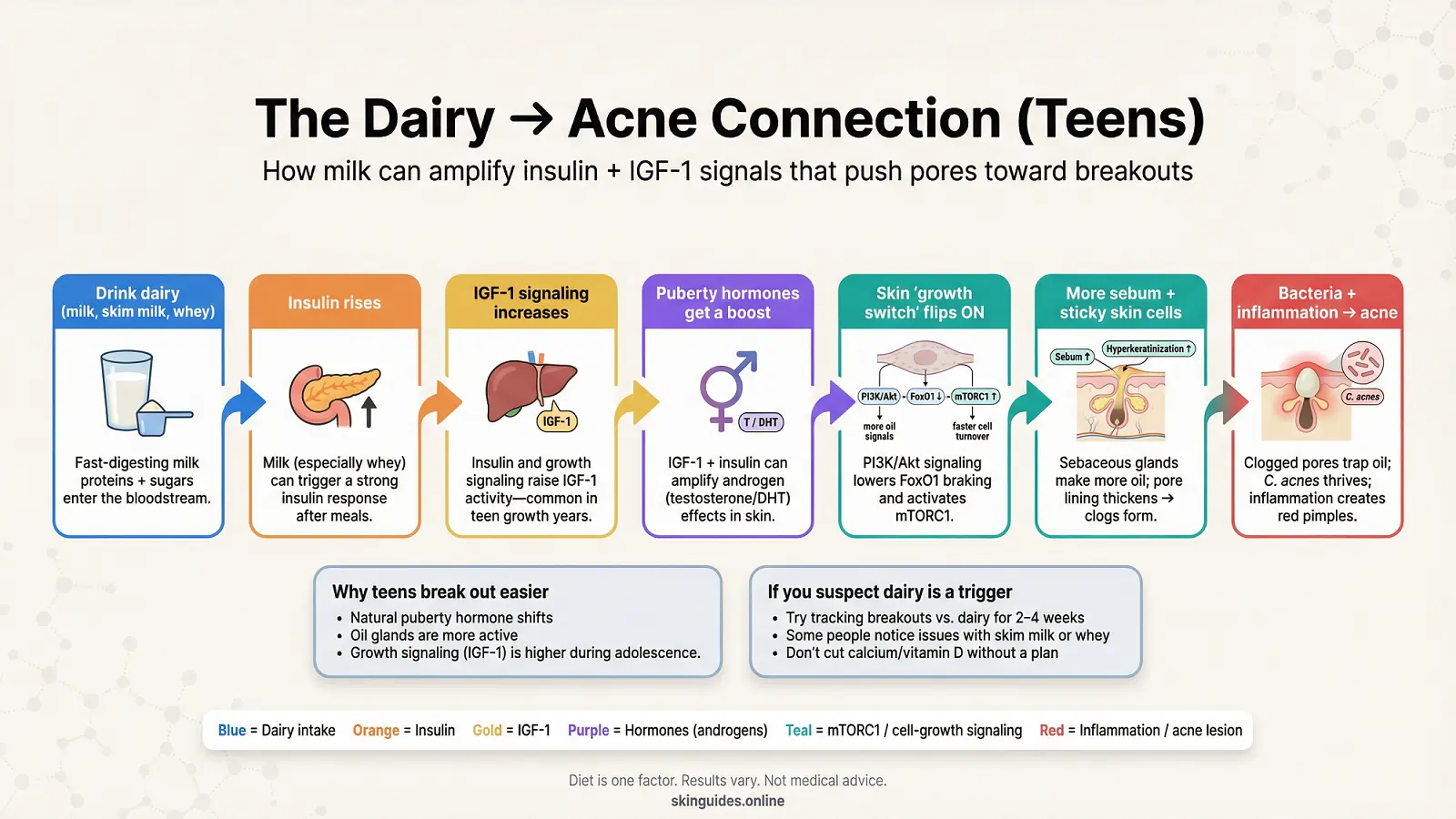
Perhaps the most compelling evidence for dietary intervention comes from studies examining dairy consumption and acne. A 2018 meta-analysis published in the Journal of the American Academy of Dermatology found that any dairy consumption was associated with a 25% increased likelihood of acne. This comprehensive review analyzed data from multiple studies, providing strong evidence for the dairy-acne link that dermatologists increasingly recognize.
The mechanisms behind this connection include:
- IGF-1 (Insulin-like Growth Factor-1): Dairy naturally contains IGF-1 and stimulates its production in humans, promoting sebum production and skin cell proliferation
- Hormonal content: Cow’s milk contains natural hormones that may influence human hormone levels
- Insulin response: Dairy triggers insulin spikes, which can increase androgen activity and oil production
Interestingly, some teens appear more sensitive to dairy’s acne-triggering effects than others, likely due to genetic variations in hormone metabolism.
How Plant-Based Diets Fight Acne
A well-planned vegan diet for teen acne works through multiple mechanisms:
- Anti-inflammatory effects: Plant foods are rich in compounds that reduce systemic inflammation. Fruits, vegetables, and whole grains contain phytonutrients that calm inflammatory pathways directly linked to acne development.
- Antioxidant benefits: Colorful plant foods provide vitamins A, C, E and various polyphenols that protect skin cells from oxidative damage and support healing.
- Fiber and hormone regulation: High-fiber plant foods help regulate hormones by binding excess estrogens and promoting their elimination, supporting hormonal balance during turbulent teenage years.
- Lower glycemic impact: Plant-based meals typically have lower glycemic loads than standard Western diets, helping stabilize blood sugar and reduce insulin spikes that trigger breakouts.
What Research Actually Shows
While more research is needed, existing studies provide encouraging evidence. A 2020 study in the Journal of Clinical and Aesthetic Dermatology found that participants following low-glycemic, dairy-free diets experienced significant acne improvement within 10 weeks. Another study of over 24,000 participants found that those consuming fatty fish and vegetables regularly had lower acne rates.
However, researchers caution that individual responses vary, and dietary changes work best as part of a comprehensive approach including proper skincare and stress management.
Is Vegan Diet Safe for Growing Teens?
Critical Nutrients for Teen Development
A common concern among parents is whether plant-based eating can meet the nutritional demands of growing teenagers. The answer is yes, with careful planning. According to the Academy of Nutrition and Dietetics, well-planned vegetarian and vegan diets are healthful and nutritionally adequate for all stages of life, including adolescence. Here are the critical nutrients to focus on:
| Nutrient | Daily Requirement | Plant Sources |
|---|---|---|
| Protein | 0.85-1 gram per kg body weight | Legumes, tofu, tempeh, seitan, quinoa, and combinations of grains with beans |
| Calcium | 1,300mg | Fortified plant milks, calcium-set tofu, leafy greens like kale and bok choy, fortified orange juice |
| Iron | 15mg (especially for girls) | Lentils, chickpeas, fortified cereals, spinach, pumpkin seeds (pair with vitamin C) |
| Vitamin B12 | Essential (not in plants) | Supplementation (25-100mcg daily) or fortified foods |
| Omega-3s | For brain/skin health | Walnuts, flaxseeds, chia seeds, hemp hearts; algae-based DHA/EPA supplement |
| Zinc | For skin healing/immunity | Pumpkin seeds, chickpeas, lentils, cashews |
Red Flags: When to Seek Help
Parents should monitor for signs that nutritional needs aren’t being met:
- Persistent fatigue or weakness
- Unusual hair loss
- Difficulty concentrating
- Delayed growth or weight loss
- Slow wound healing
- Frequent infections
If any concerns arise, consult a healthcare provider immediately.
Foods That Fight Acne (and Foods to Avoid)
Acne-Fighting Vegan Superstars
Building an effective acne-clearing vegan diet means emphasizing specific nutrient-dense foods:
- Omega-3 powerhouses: Walnuts, ground flaxseeds, chia seeds, and hemp hearts provide anti-inflammatory fatty acids that calm irritated skin.
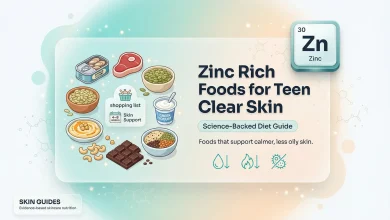
- Zinc-rich foods: Pumpkin seeds, lentils, chickpeas, and cashews support skin healing and regulate oil production.
- Antioxidant champions: Berries (especially blueberries and strawberries), leafy greens, sweet potatoes, and colorful bell peppers protect skin cells and reduce inflammation.
- Probiotic foods: Sauerkraut, kimchi, kombucha, and coconut yogurt support gut health, which directly influences skin clarity through the gut-skin axis.
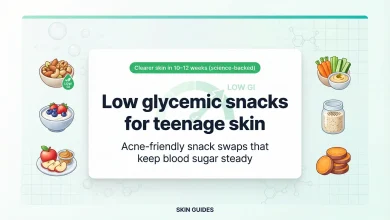
- Low-glycemic whole grains: Quinoa, steel-cut oats and brown rice provide steady energy without blood sugar spikes.
Vegan Foods That May Trigger Breakouts
Not all plant foods are created equal for acne-prone skin:
- High-glycemic foods: White bread, white rice, and instant oatmeal can spike blood sugar. Choose whole grain alternatives instead.
- Processed vegan junk food: Vegan cookies, chips and meat alternatives often contain refined oils and sugars that may worsen acne.
- Excessive soy: While moderate soy consumption is generally fine, some individuals find concentrated soy products trigger breakouts. Monitor your response.
- Hidden sugars: Fruit juices, dried fruits, and sweetened plant milks contain concentrated sugars. Opt for whole fruits and unsweetened alternatives.
The Practical Transition Plan
Week-by-Week Transition Protocol
Rather than overhauling everything overnight, a gradual approach increases success rates:
- Weeks 1-2: Eliminate dairy. Replace cow’s milk with fortified plant alternatives. Swap cheese for nutritional yeast or cashew-based options. Read labels carefully because dairy hides in many processed foods.
- Weeks 3-4: Reduce meat. Replace meat with legumes, tofu, and tempeh in familiar recipes. Try meatless versions of favorite meals.
- Weeks 5-6: Go fully plant-based. By now, you’ve built new habits and discovered foods you enjoy. Complete the transition while continuing to monitor nutrition.
Managing Initial Breakouts
Some teens experience temporary worsening before improvement. This isn’t “detox” but is often related to:
- Stress from dietary changes
- Increased consumption of new trigger foods
- Natural acne cycles
Give the diet at least 8-12 weeks before judging effectiveness. If severe worsening occurs, consult your dermatologist.
Navigating School and Social Situations
- Cafeteria strategies: Identify plant-based options in advance. Many schools now offer salad bars, bean-based dishes, and vegetable sides.
- Packed lunches: Prepare Buddha bowls, wraps with hummus and vegetables or thermos-packed soups and stews.
- Social events: Eat beforehand if options are limited, bring a dish to share or communicate dietary needs to hosts.
Sample Acne-Clearing Meal Ideas
Breakfast Options
- Overnight oats with chia seeds, walnuts and fresh berries
- Smoothie bowl with spinach, banana, flaxseed and pumpkin seeds
- Avocado toast on whole grain bread with hemp hearts
Lunch Ideas
- Quinoa bowl with roasted vegetables, chickpeas and tahini dressing
- Lentil soup with a large leafy green salad
- Whole grain wrap with hummus, vegetables and tempeh
Dinner Recipes
- Stir-fried tofu with broccoli, bok choy, and brown rice
- Black bean tacos with fresh salsa and guacamole
- Mediterranean-style chickpea stew with whole grain pita
Tracking Progress and Setting Expectations
Realistic Timeline
- Weeks 1-2: Digestive adjustment, possible temporary breakouts, increased energy for many teens.
- Month 1: Reduced inflammation, fewer new breakouts forming, skin beginning to heal.
- Months 2-3: Significant improvements typically visible, clearer complexion, reduced redness and scarring.
- Long-term: Maintained results with consistent dietary patterns, occasional flexibility possible once skin stabilizes.
Tracking Tools
Keep a simple skin diary documenting:
- Daily food intake
- New breakouts and their locations
- Energy levels and mood
- Sleep quality
- Stress factors
Weekly photos in consistent lighting help objectively track changes that daily mirror checks might miss.
Expert Insights
Pediatric dermatologists increasingly acknowledge diet’s role in acne. Dr. Whitney Bowe, a board-certified dermatologist and author of “The Beauty of Dirty Skin,” notes that while topical treatments remain important, addressing dietary triggers creates a “foundation for clearer skin.” Her research on the gut-skin connection has helped thousands understand how food choices directly impact complexion.
Registered dietitians emphasize that vegan diets can absolutely meet teen nutritional needs when properly planned. The key is variety, adequate calories and appropriate supplementation.
Conclusion and Action Steps
A vegan diet for teen acne offers a promising, science-supported approach to clearer skin. By eliminating dairy, reducing glycemic load and emphasizing anti-inflammatory plant foods, many teenagers experience significant improvement in their acne.
Your 30-Day Action Plan
- Week 1: Consult healthcare providers and begin eliminating dairy
- Week 2: Stock kitchen with acne-fighting plant foods
- Week 3: Begin reducing meat while ensuring protein needs are met
- Week 4: Complete transition and establish supplementation routine
Final Encouragement
Remember, skin healing takes time. Approach this journey with patience and self-compassion. While dietary changes can be transformative, they work best alongside proper skincare, stress management and adequate sleep.
For severe or persistent acne, always work with a dermatologist who can provide comprehensive treatment. A vegan diet is a powerful tool, but it’s most effective as part of a holistic approach to teen health and wellness.
Your skin tells a story of what’s happening inside your body. By nourishing yourself with wholesome plant foods, you’re giving your skin and your entire body the foundation it needs to thrive.
Disclaimer: This article is for informational purposes only and does not constitute medical advice. Individual results vary. Consult qualified healthcare professionals before making dietary changes.