Vitamin C for Mature Aging Skin: The Only Guide for Women Over 50!

Introduction: Why Vitamin C Works Differently After 50
Three years ago, at 52, I caught my reflection in a department store mirror and barely recognized myself. The vitamin C for mature aging skin routine I desperately needed was completely different from what had worked throughout my 40s. My skin looked dull, the age spots were multiplying, and those fine lines around my eyes had deepened overnight.
Sound familiar?
Here’s what nobody tells you: vitamin C works differently after age 50, and understanding this distinction is the key to unlocking its transformative potential for mature skin.
A vitamin C serum is particularly essential for mature skin types, but the approach needs to evolve. As we age, our natural antioxidant defenses in the skin reduce significantly. The sobering reality? Around 85% of visible aging results from exposure to external aggressors like UV rays, pollution, and environmental stressors.
The unique challenges of mature skin decreased collagen production, thinner epidermis, and dramatically slower cell turnover mean that the vitamin C routine that served you well at 35 simply won’t cut it anymore.
In this comprehensive guide, you will learn exactly how to select the right vitamin C formulation for your mature skin, master application techniques that maximize absorption, and understand the realistic timeline for seeing genuine results. Whether you are dealing with crepey skin, stubborn age spots, or concerning skin thinning, this guide has you covered.
The Science: How Vitamin C Transforms Mature Skin at the Cellular Level
Collagen Synthesis & Skin Structure
Let’s get specific about how does vitamin C stimulate collagen at the cellular level because understanding this process helps you make smarter choices about your skincare.
Vitamin C is essential for collagen synthesis, a protein that provides structure and elasticity to the skin. By stimulating collagen production, vitamin C can help improve skin firmness and reduce the appearance of fine lines and wrinkles. But here’s the fascinating part: it works through a process called hydroxylation, where vitamin C acts as a cofactor for enzymes that stabilize and cross-link collagen molecules.
Clinical evidence is compelling: topically applied vitamin C is highly efficient as a rejuvenation therapy, inducing significant collagen synthesis in all age groups with minimal side effects. Research demonstrates that 5% vitamin C cream was an effective and well-tolerated treatment, showing clinically apparent improvement of photodamaged skin in controlled trials over 6 months. This includes both Type I and Type III collagen the former providing tensile strength, the latter supporting skin’s soft, supple texture.
For mature skin specifically, Type I collagen becomes increasingly important as it makes up approximately 80% of our skin’s collagen framework. When vitamin C stimulates Type I and III collagen synthesis simultaneously, the result is visibly firmer, more resilient skin.
Cellular Renewal & Epidermal Thickening
Here’s something crucial about epidermal renewal and vitamin C that directly impacts women over 50.
Research shows that protein synthesis and neofibrillogenesis (the creation of new collagen fibers) remain active up to age 50, then decrease slightly. The significant finding? The activation of collagen synthesis after the age of 50 requires prolonged topical product application, which is explained by the changes in the penetrance of the cutaneous barrier.
Translation: You will need patience and consistency that younger skin doesn’t require.
Vitamin C also promotes keratinocyte proliferation the production of new skin cells in your epidermis. This process slows considerably with age, but vitamin C gives it a much-needed boost, contributing to epidermal thickening and improved barrier function.
Antioxidant Protection & MMP Inhibition
Perhaps vitamin C’s most underrated superpower for mature skin is matrix metalloproteinase inhibition. MMPs are enzymes that break down collagen and they become increasingly active as we age.
Vitamin C inhibits metalloproteinase-1 (MMP-1) activity, essentially putting the brakes on collagen destruction while simultaneously promoting new collagen formation. This dual action makes vitamin C invaluable for photoaging protection as an antioxidant.
The antioxidant protection extends further: vitamin C neutralizes free radicals before they can damage skin cells, preventing the cascade of oxidative stress that accelerates aging. For mature skin that’s accumulated decades of sun exposure, this prevention of further photoaging is just as important as repairing existing damage.
Choosing the Right Vitamin C: Concentration, Form & pH
Optimal Concentrations for Mature Skin
One of the most common questions I hear: what concentration of vitamin C is best for mature skin?
Serum vitamin C concentration typically ranges from 5% to 20%. Higher concentrations may provide more noticeable results but can also increase the risk of irritation, especially for sensitive skin. The general recommendation is to start with a lower concentration and gradually increase if your skin tolerates it well.
Dermatologists offer clearer guidance: to be effective in most cases, the concentration should be higher than 8%. Most reputable vitamin C products are in the range of 10-20%. Vitamin C preparations above 20% do not increase efficacy and can cause irritation.
For mature sensitive skin, here’s my recommended starting protocol:
- Weeks 1-2: Begin with a 5% vitamin C serum to test tolerance
- Weeks 3-4: If no irritation occurs, move to 10%
- Month 2 onwards: Graduate to 15-20% for optimal results
Forms of Vitamin C & Stability
When researching L-ascorbic acid for aging skin, you’ll encounter various vitamin C derivatives. Here’s what you need to know:
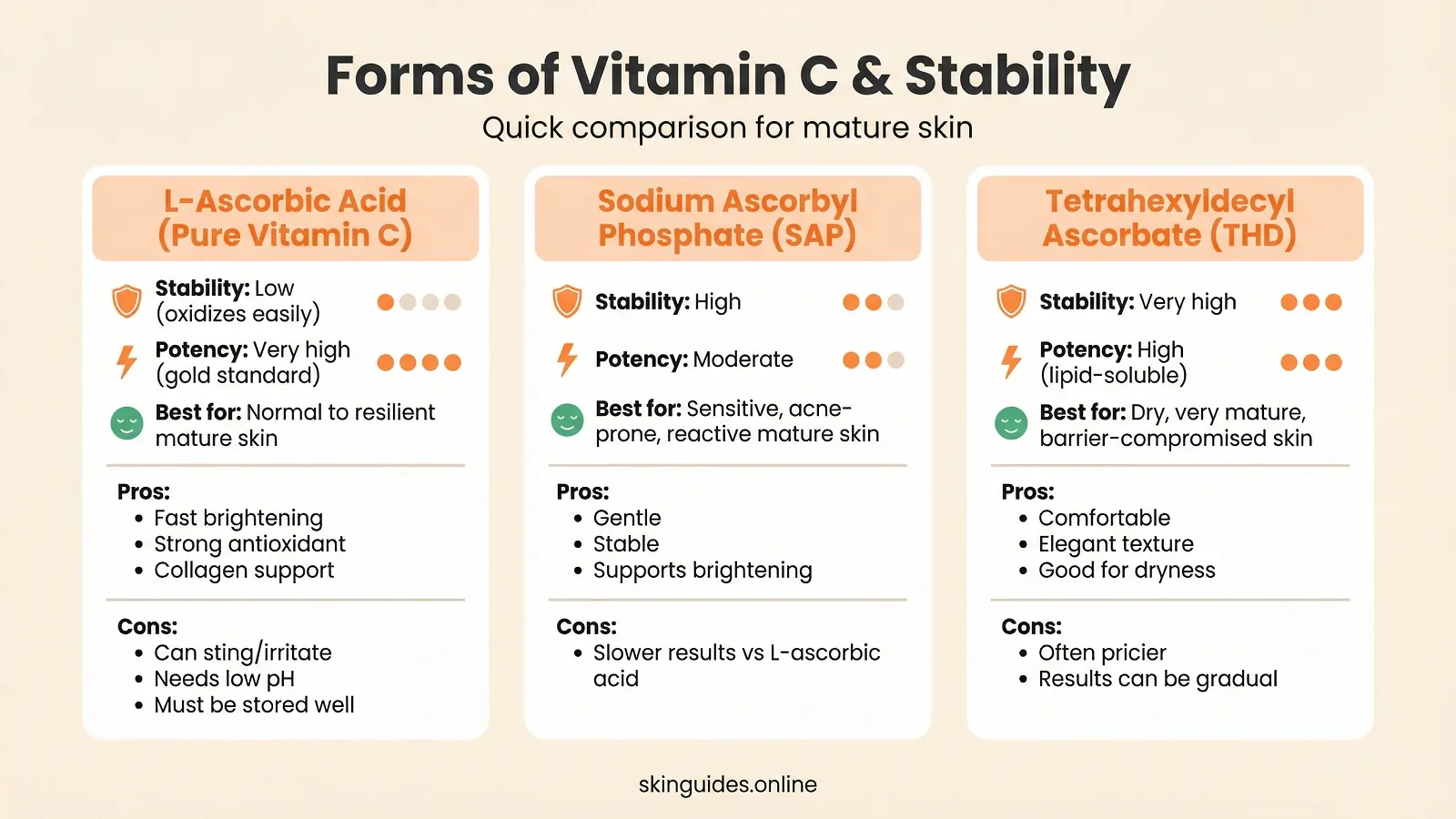
- L-Ascorbic Acid: The gold standard. Most research-backed but also the most unstable and potentially irritating. Best for mature skin that can tolerate it.
- Sodium Ascorbyl Phosphate: Gentler, more stable, effective for hyperpigmentation. Ideal for sensitive mature skin.
- Tetrahexyldecyl Ascorbate: Oil-soluble, penetrates deeper, extremely stable. Excellent for very dry mature skin.
pH considerations are critical. Vitamin C is most effective at a pH level below 3.5. Look for serums with a pH between 2.5 and 3.5 to ensure optimal absorption and stability of vitamin C. Products outside this range simply won’t deliver maximum benefits.
Stabilizing ingredients to look for include ferulic acid (which boosts vitamin C’s efficacy by up to 8x) and vitamin E (which works synergistically for enhanced antioxidant protection).
Targeted Solutions for Mature Skin Concerns
Crepey Skin & Loss of Elasticity
If you are dealing with vitamin C for crepey skin on face that tissue-paper texture that seems to appear overnight clinical research offers hope.
Studies demonstrate significant improvement in skin elasticity after consistent vitamin C application, along with a notable reduction in erythema (redness). For tightening crepey skin with vitamin C, patience is essential, but results do come.
Application tips for neck and décolletage:
- Always extend serum application below the jawline
- Use gentle upward strokes, never tugging delicate skin
- Consider combining with peptides for enhanced firming benefits and skin elasticity loss prevention
Age Spots & Hyperpigmentation
Fading age spots with vitamin C is one of the most gratifying transformations you can achieve. Vitamin C works by inhibiting melanin production, the pigment responsible for dark spots and uneven skin tone. Over time, consistent use can result in a more even complexion and a noticeable glow.
The research supports this: ascorbic acid is an important depigmenting agent because it inhibits tyrosinase the enzyme responsible for melanin production. Studies confirm vitamin C can protect against photoaging and increase collagen synthesis while simultaneously decreasing melanin formation. One study found that application of a formulation containing 25% vitamin C for 16 weeks resulted in significant reduction in melasma-induced pigmentation.
For vitamin C for sun spots on older skin, the key is consistency. Those spots took decades to develop; give vitamin C at least three to six months to make a visible difference.
Sagging & Volume Loss
“Does vitamin C help with sagging skin after 60?” This question deserves an honest answer.
Vitamin C alone won’t replicate surgical results, but it can make a meaningful difference especially when combined with hyaluronic acid for volume restoration and peptides for structural support. For vitamin c for sagging jowls, consider this a long-term strategy rather than a quick fix.
Set realistic expectations: vitamin C can improve skin firmness, support the underlying collagen matrix, and create a tighter appearance over time. It works best as part of a comprehensive approach rather than a standalone miracle cure.
Thinning Skin & Fragility
Can vitamin C reverse skin thinning in elderly individuals? The research is encouraging.
Remember this key finding: the activation of collagen synthesis after age 50 requires prolonged topical product application, which is explained by changes in the penetrance of the cutaneous barrier. This means vitamin c skin thinning prevention elderly is absolutely achievable but requires extended commitment.
How does vitamin C thicken aging skin? Through consistent collagen stimulation and enhanced keratinocyte production, vitamin C can gradually rebuild epidermal density. For fragile skin, opt for gentler vitamin C derivatives and incorporate barrier repair strategies including ceramides and niacinamide.
Application Guide: Maximizing Results
Morning vs Evening Application
Best time to apply vitamin C serum morning or night? The experts are clear on this one.
Vitamin C serums are best used in the morning after cleansing and before applying moisturizer and sunscreen. This dermatologist-recommended vitamin C application protocol allows vitamin C to protect your skin from daily environmental damage throughout the day. The American Academy of Dermatology emphasizes this morning application timing to maximize the antioxidant protection against UV rays and pollution you’ll encounter during your day.
However, for how to use vitamin C serum on sensitive aging skin, consider these modifications:
- Start with every other day application
- Apply to slightly damp skin for gentler absorption
- Build up to daily morning use over 2-3 weeks
Layering & Compatibility
The vitamin E combination with vitamin C is synergistic these antioxidants enhance each other’s performance. Similarly, ferulic acid stabilizes vitamin C while boosting its efficacy.
Hyaluronic acid pairing is excellent: apply vitamin C first, then hyaluronic acid to lock in moisture.
What NOT to mix with vitamin C:
- Direct layering with niacinamide (wait 10-15 minutes between)
- AHAs/BHAs at the same time (alternate AM/PM)
- Benzoyl peroxide (it can deactivate vitamin C)
- Retinol (use vitamin C morning, retinol evening)
Application Technique
Apply vitamin C in the morning before moisturizer and sunscreen to protect against free radicals. Use a pea-sized amount, gently pressing it into clean, dry skin. Follow with SPF 30+ sunscreen non-negotiable for mature skin.
For under-eye circles vitamin C treatment, use your ring finger for the lightest pressure and pat gently around the orbital bone.
Timeline & Expectations
Week-by-Week Progress for Mature Skin
Understanding vitamin C results timeline for mature skin helps manage expectations realistically.
- Weeks 1-2: Initial brightening; skin may appear more luminous. Some users experience mild tingling this is normal.
- Week 4: Clinically proven to boost luminosity immediately and promote brighter and tighter skin in four weeks. You’ll notice improved radiance.
- Weeks 6-8: Visible texture improvement; fine lines may appear softer.
- Week 8 onwards: Day-to-day application for 56 days typically results in visible improvement in skin appearance (smoothing and brightening) and texture.
Long-Term Benefits (3-6 Months)
How long does vitamin C take to work on mature skin for significant changes? Plan on three to six months for:
- Cumulative collagen building
- Sustained pigmentation improvement
- Noticeable firmness enhancement
- Prevention of future damage
Managing Side Effects & Sensitivity
Common Reactions
Side effects of vitamin C on mature sensitive skin can include:
- Initial tingling or warmth (usually subsides within minutes)
- Temporary redness
- Occasional dryness
Purging vs irritation: Purging involves breakouts in areas where you typically get them; irritation appears as overall redness, stinging or inflammation. If you experience irritation, reduce frequency immediately.
Solutions for Sensitive Skin
The buffer method works beautifully for skin barrier function mature skin: apply moisturizer first, wait five minutes, then apply vitamin C serum. This gentler approach still delivers benefits while minimizing irritation.
Alternative vitamin C forms like sodium ascorbyl phosphate or ascorbyl glucoside offer effective results with reduced irritation potential.
What Real Users Say
The testimonials from women over 50 are compelling. As one 77-year-old user shared: “I have really noticed an improvement. My skin glows, it’s very smooth and much brighter… Even my 20-year-old granddaughter remarked on how pretty my skin looked.”
This clinical-level approach to skincare, when consistently applied, visibly improves firmness and elasticity, making it a great option for aging, lax skin.
Frequently Asked Questions
Q: What concentration of vitamin C is best for mature skin?
A percentage between 10-20% is effective without being too harsh. Start at 10% and increase as tolerated. Keep in mind that concentrations above 20% do not provide additional benefits and may cause unnecessary irritation, especially for sensitive mature skin types.
Q: How does vitamin C thicken aging skin?
It’s essential for collagen synthesis, a protein that provides structure and elasticity to the skin. By stimulating collagen production, vitamin C helps improve skin firmness and epidermal density over time. Additionally, vitamin C promotes keratinocyte proliferation, which enhances cellular renewal and strengthens the skin’s protective barrier function.
Q: Can vitamin C reverse skin thinning in elderly individuals?
While “reverse” may be ambitious, vitamin C can significantly slow further thinning and gradually rebuild collagen with consistent, prolonged use typically 3-6 months minimum. For best results, combine vitamin C with barrier-supporting ingredients like ceramides and hyaluronic acid to maximize skin restoration and protection.
Q: Best vitamin C serum pH for absorption?
Look for pH levels between 2.5 and 3.5 for optimal absorption and efficacy. At this acidic pH range, L-ascorbic acid remains stable and can effectively penetrate the skin barrier to deliver maximum antioxidant and collagen-boosting benefits for mature skin.
Final Thoughts
The journey to healthier mature skin with vitamin C isn’t about finding a miracle product it’s about understanding how your skin has changed and adapting your approach accordingly.
Start with an appropriate concentration, choose a stable formulation with the right pH, apply consistently every morning, and give yourself grace with the timeline. While vitamin C is crucial for mature skin, remember it’s just one part of a comprehensive skincare approach that should include the best vitamins for overall skin health tailored to your specific needs. Your 50+ skin is capable of remarkable transformation; it simply requires a different strategy than it did two decades ago.
The science is solid. The results are achievable. And you deserve to see your skin glow again.
Disclaimer:
This content is for informational purposes only and does not constitute medical advice. Please consult a dermatologist or healthcare professional before making changes to your skincare routine, particularly if you have sensitive skin or underlying health conditions. Results may vary based on individual skin type, consistency of use, and other factors.