General Diet Tips for Skin Health: Best Eating Strategies

The saying “you are what you eat” holds remarkable truth when it comes to your skin. What lands on your plate directly impacts what shows up on your face—making your refrigerator one of the most powerful skincare tools you own
In this guide to general diet tips for skin health, you will discover which foods and nutrients promote radiant, healthy skin, what to avoid, and how long realistic results actually take. Your skin requires several key nutrients to stay healthy, including vitamins that support skin repair and glow like A, C, D, and E that protect against damage and promote cell regeneration
Quick Answer: The best diet for skin health includes foods rich in vitamins A, C and E, omega‑3 fatty acids, zinc and antioxidants. Focus on fatty fish, leafy greens, berries, nuts and plenty of water while limiting sugar, processed foods and dairy (for some people). Most people notice visible improvements within 4–8 weeks of consistent dietary changes.
How Does Diet Actually Affect Your Skin?
Understanding the diet-skin connection starts with recognizing that your skin constantly renews itself. Every 28 days or so, your body creates entirely new skin cells to replace old ones. The quality of these new cells depends heavily on the nutrients available during their formation.
Think of it like building a house. You could use cheap, flimsy materials and end up with a structure that cracks and deteriorates quickly. Or you could invest in quality building blocks that create something strong and beautiful. Your skin cells work the same way give them premium nutrients and they will construct healthier, more resilient skin.
Beyond cell renewal, diet affects skin through inflammation pathways. Certain foods trigger inflammatory responses throughout your body and this inflammation often manifests visibly on your skin as redness, puffiness, breakouts or accelerated aging. Conversely, anti-inflammatory foods help calm these responses and promote clearer, calmer skin.
The gut-skin axis represents another crucial connection. Research increasingly shows that digestive health directly influences skin conditions. An imbalanced gut microbiome can lead to systemic inflammation that surfaces through skin problems like acne, eczema and premature aging. A Harvard Health review also highlights vitamins A, C, and E as key nutrients for maintaining skin structure and protecting against oxidative damage
Essential Vitamins for Radiant Skin
Vitamin A: The Skin Renewal Vitamin
Vitamin A stands as perhaps the most critical nutrient for skin health. It regulates cell turnover, helping your body shed dead skin cells and generate fresh, healthy ones more efficiently. Dermatologists have long recognized vitamin A’s power retinoids, the gold standard in anti-aging treatments, are essentially vitamin A derivatives.
Best food sources include:
- Sweet potatoes (one medium potato provides 400% of daily needs)
- Carrots and carrot juice
- Spinach and kale
- Butternut squash
- Cantaloupe and mangoes
- Signs you might need more vitamin A include dry, flaky skin, slow wound healing, and rough, bumpy texture on arms or thighs.
Vitamin C: The Collagen Builder
Without adequate vitamin C, your body simply cannot produce collagen effectively. This essential vitamin serves as a critical cofactor in collagen synthesis while simultaneously providing powerful antioxidant protection against environmental damage.
Vitamin C also helps brighten skin tone and fade dark spots by inhibiting excess melanin production. Studies show that higher vitamin C intake correlates with fewer wrinkles and less age-related skin dryness.
Top vitamin C sources:
- Bell peppers (especially red and yellow varieties)
- Citrus fruits (oranges, grapefruits, lemons)
- Strawberries and kiwis
- Broccoli and Brussels sprouts
- Tomatoes
- Aim for at least 75-90 mg daily, though many nutrition experts recommend higher amounts for optimal skin benefits.
Vitamin E: The Skin Protector
Vitamin E works synergistically with vitamin C to protect your skin from UV damage and environmental stressors. This fat-soluble vitamin integrates into cell membranes, where it neutralizes free radicals before they can cause oxidative damage.
Beyond protection, vitamin E helps maintain skin moisture by strengthening the skin barrier function. People with vitamin E deficiency often experience dry, dull skin that struggles to retain hydration.
Excellent vitamin E sources:
- Almonds and sunflower seeds
- Avocados
- Olive oil and wheat germ oil
- Hazelnuts and peanuts
- Spinach and Swiss chard
Key Minerals for Clear, Healthy Skin
Zinc: The Acne Fighter
If you struggle with breakouts, zinc deserves your attention. This mineral plays crucial roles in wound healing, inflammation control, and regulating oil production. Multiple studies demonstrate that people with acne often have lower zinc levels than those with clear skin.
Zinc also supports the immune system functions that help your skin fight off bacteria contributing to breakouts. Some dermatologists recommend zinc supplements specifically for acne treatment, though food sources provide additional nutritional benefits.
Best zinc sources:
- Oysters (highest zinc content of any food)
- Pumpkin seeds
- Chickpeas and lentils
- Beef and lamb
- Cashews
Selenium: The Antioxidant Mineral
Selenium protects skin cells from oxidative stress and supports overall skin elasticity. This trace mineral works closely with vitamin E to provide comprehensive antioxidant defense.
Here’s an easy hack: just two Brazil nuts daily provide your entire selenium requirement. It’s one of the simplest skin-health upgrades you can make.
Mineral Skin Benefit Top Food Source Daily Target
- Zinc Reduces acne, heals wounds Oysters, pumpkin seeds 8-11 mg
- Selenium Antioxidant protection Brazil nuts, fish 55 mcg
- Copper Supports elastin production Shellfish, nuts 900 mcg
Omega-3 Fatty Acids: Your Skin’s Best Friend
Healthy fats are not just acceptable for skin health they are absolutely essential. Omega-3 fatty acids maintain your skin cell membranes, keeping them flexible and hydrated. Without adequate omega-3 intake, skin often appears dry, dull and prone to irritation.
The anti-inflammatory properties of omega-3s prove particularly valuable for inflammatory skin conditions. Research shows that people who consume more omega-3s experience fewer issues with acne, psoriasis and eczema.
Prioritize these omega-3 sources:
Fatty fish: salmon, mackerel, sardines, and herring
Chia seeds and flaxseeds
Walnuts
Fish oil supplements (if needed)
Aim to eat fatty fish at least 2-3 times weekly. If you follow a plant-based diet, focus on chia seeds, flaxseeds, and consider an algae-based omega-3 supplement for optimal benefits.
Diet affects everyone’s skin, but women face additional challenges. Hormones play a huge role in how female skin looks and feels. Estrogen levels, monthly cycles, and age-related changes all impact skin health. That is why we created a separate guide on [best diet for women’s skin] with specific recommendations for women in their 20s, 30s, 40s, and beyond.
Antioxidant-Rich Foods for Youthful Skin
Free radicals constantly attack your skin cells, causing oxidative damage that accelerates aging and contributes to various skin problems. Antioxidants neutralize these harmful molecules, essentially providing a protective shield for your skin.
The key lies in eating a rainbow of colorful foods. Different colors indicate different antioxidant compounds, each offering unique protective benefits.
Top 10 Antioxidant Foods for Glowing Skin:
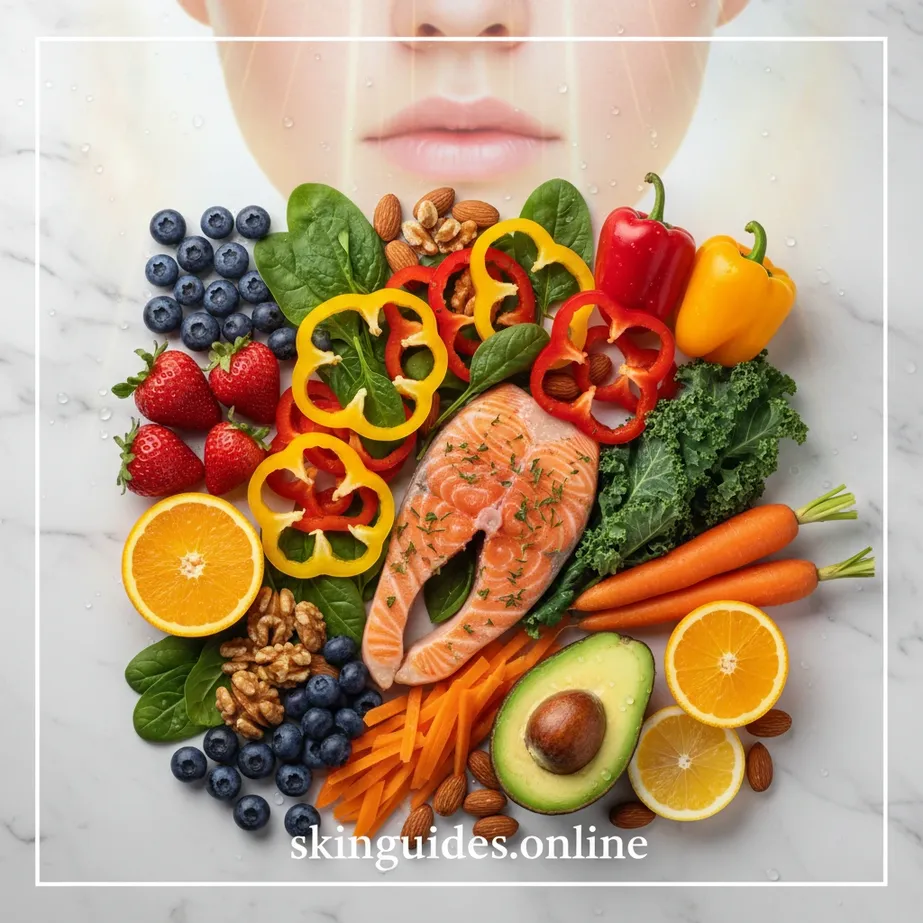
- Blueberries: Among the highest antioxidant contents of any fruit
- Dark chocolate (70%+ cacao): Flavonoids improve blood flow to skin
- Spinach: Loaded with skin-protective compounds
- Green tea: Catechins protect against sun damage
- Tomatoes: Lycopene guards against UV damage
- Bell peppers: Vitamin C powerhouse
- Pomegranates: Support collagen production
- Carrots: Beta-carotene converts to vitamin A
- Beets: Improve blood circulation to skin
- Red grapes: Resveratrol fights aging
The easiest approach? Fill half your plate with colorful vegetables at each meal. The more variety in colors you consume, the broader your antioxidant protection becomes.
Hydration: The Foundation of Skin Health
Water might not seem exciting, but adequate hydration forms the foundation of healthy skin. Your skin cells require water to function optimally, transport nutrients, and flush toxins. Dehydrated skin appears dull, emphasizes fine lines, and loses its natural plumpness.
While drinking water helps maintain overall hydration, you can boost your intake through water-rich foods:
Cucumbers (96% water)
Watermelon (92% water)
Strawberries (91% water)
Lettuce and celery
Oranges and grapefruits
How much should you drink?
A simple formula: divide your body weight in pounds by two that’s approximately how many ounces of water you should consume daily. A 160-pound person would aim for about 80 ounces (roughly 10 cups).
Beyond plain water, green tea provides excellent hydration plus antioxidant benefits. Herbal teas and vegetable-based juices also contribute to your daily fluid intake. However, limit alcohol and excessive caffeine, as these can dehydrate skin and accelerate aging.
Collagen-Boosting Foods: Eating Your Way to Firmer Skin
Collagen provides the structural scaffolding that keeps skin firm, plump, and youthful. Unfortunately, collagen production naturally declines with age starting around your mid-20s and accelerating from there.
While you cannot directly absorb collagen from food into your skin, certain foods provide the building blocks and support nutrients your body needs for collagen synthesis.
Foods that support collagen production:
- Bone broth: Contains collagen that breaks down into usable amino acids
- Citrus fruits: Vitamin C is essential for collagen synthesis
- Egg whites: Provide proline, a key collagen amino acid
- Berries: Protect existing collagen from breakdown
- Garlic: Sulfur compounds support collagen production
- Leafy greens: Chlorophyll may increase collagen precursors
Should you take collagen supplements? Research shows promising results, particularly for skin hydration and elasticity. However a diet rich in vitamin C, quality protein and antioxidants provides natural building blocks for collagen production without supplementation.
Foods to AVOID for Healthy Skin
Knowing what to eat matters, but understanding what to limit proves equally important. Certain foods actively work against your skin health goals.
Sugar and High-Glycemic Foods
Sugar might be your skin’s worst enemy. When you consume excess sugar, it attaches to proteins through a process called glycation, creating harmful compounds called AGEs (Advanced Glycation End products). These AGEs damage collagen and elastin, accelerating visible aging.
High-glycemic foods like white bread, pastries, sugary cereals, and candy — cause rapid blood sugar spikes that trigger inflammation and may worsen acne.
Processed and Fried Foods
Heavily processed foods contain inflammatory fats, excessive sodium, and artificial additives that stress your body and reflect negatively on your skin. Fried foods are particularly problematic due to oxidized fats that increase inflammation.
Dairy Products (For Some People)
The dairy-acne connection affects some individuals more than others. Research suggests hormones in dairy may stimulate oil glands and worsen breakouts. If you struggle with persistent acne, a 3-4 week dairy elimination trial might reveal whether it’s a trigger for you.
Excessive Alcohol
Alcohol dehydrates your entire body, including your skin. It also dilates blood vessels, potentially worsening redness and rosacea. Limiting alcohol consumption helps maintain skin hydration and reduces inflammatory burden.
Foods to Limit — Quick List:
❌ Sugary drinks and desserts
❌ White bread and refined carbohydrates
❌ Fried foods and fast food
❌ Excessive dairy (test individually)
❌ Processed meats
❌ Alcohol (especially in excess)
❌ Very salty snacks
How Long Until You See Results?
This question deserves an honest answer. Your skin operates on roughly a 28-day renewal cycle, meaning you’re essentially growing new skin each month. Dietary changes influence the quality of these new cells as they form.
Timeline What to Expect
2-4 weeks Improved hydration, subtle glow
4-8 weeks Reduced breakouts, better texture
2-3 months Noticeable clarity and firmness
6+ months Maximum diet-related improvements
Reality check: Diet represents one piece of a larger puzzle. Consistent skincare, adequate sleep, stress management, and sun protection all work synergistically with nutrition. Don’t expect diet alone to solve every skin concern, but do expect meaningful improvement when combined with overall healthy habits.
Key Takeaways: Your Skin-Healthy Eating Checklist
Transform your skin by implementing these evidence-based dietary strategies:
✅ Eat fatty fish 2-3 times weekly (salmon, mackerel, sardines)
✅ Fill half your plate with colorful vegetables at every meal
✅ Snack on nuts and seeds (almonds, walnuts, pumpkin seeds)
✅ Include berries daily for antioxidant protection
✅ Stay hydrated (aim for 8+ glasses of water daily)
✅ Add fermented foods for gut health (yogurt, kimchi, sauerkraut)
✅ Choose whole grains over refined carbohydrates
✅ Limit added sugars and heavily processed foods
✅ Consider reducing dairy if you experience persistent acne
✅ Be patient — allow 4-8 weeks minimum for visible changes
Final Thoughts
Your journey to healthier skin doesn’t require expensive treatments or complicated routines. It starts with the simple decisions you make at each meal. By consistently choosing nutrient-dense foods while limiting inflammatory triggers, you provide your skin with everything it needs to look and feel its best. Remember, healthy skin reflects overall health. When you nourish your body properly, the benefits extend far beyond your complexion you will likely notice improved energy, better digestion and enhanced overall wellbeing alongside your glowing skin. For more diet, lifestyle, and skincare guides, explore Skin Guides – your complete resource for healthy, glowing skin
This article is for informational purposes only and doesn’t replace professional medical advice. Consult a dermatologist or registered dietitian for personalized recommendations.